paris becomes a city to look at
The flâneur wanders through Paris, a city that is changing quickly, with new streets and boulevards, covered passages, cafés, department stores, advertisements, and shop windows reshaping the experience of the French capital. Walking is no longer only a way of getting from one place to another; it also becomes a way of watching what is happening around you, from the people moving through the streets to the buildings, fashions, signs, and goods on display.
This change is particularly clear in the Parisian arcades, where the street moves indoors and becomes a covered passage lined with shops, cafés, and other places to stop and look. Structures such as the Passage des Panoramas and Galerie Vivienne create a space between the street and the interior, giving pedestrians somewhere to walk without necessarily having a destination. The design of these passages draws attention to what is around them, whether it is a shop window, another pedestrian, the details of the building, or the movement between the enclosed passage and the street outside.
During the transformation of Paris under Georges-Eugène Haussmann in the mid-19th century, wider streets and longer views change how people see and move through the city. The boulevard becomes a place where the city can be observed, with pedestrians, traffic, architecture, and everyday life unfolding in front of those passing through. The rise of the department store adds another layer to this experience, bringing looking and shopping closer together. The shop window, in particular, gives pedestrians a reason to pause, look, and imagine the life associated with the objects on display before they even enter the store. It is within this growing mix of streets, crowds, shops, and visual distractions that the flâneur takes shape as a particular kind of urban observer. He can move through the city without rushing toward a destination, using the freedom to wander as a way of paying attention to the changing life around him.
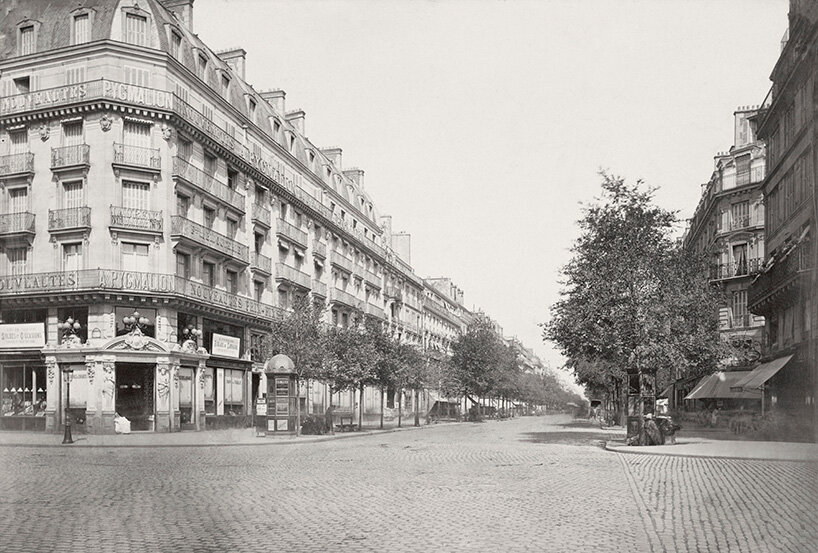
Boulevard de Sébastopol ca. 1853–70 | Charles Marville, Public domain, via Wikimedia Commons

baudelaire’s ‘passionate spectator’
In The Painter of Modern Life, written in the 1860s, Charles Baudelaire describes the flâneur as the figure of the modern observer, someone who is deeply engaged with the transient character of contemporary life. He wanders the city without looking for timeless beauty but finds significance in its changing appearances, its fashions, crowds, gestures, and fleeting encounters, treating the everyday metropolis as material for observation. Baudelaire’s understanding of modernity is important because it shifts attention toward what is temporary and unstable, suggesting that the modern city is defined precisely by its constant transformation. The flâneur walks with no purpose; his apparent idleness allows him to remain attentive to the city as it changes around him, moving between the positions of participant and observer without fully belonging to either.
This distinction also separates the flâneur from the merely curious pedestrian or the crowd gawker, since the figure described by the French poet possesses a more deliberate form of attention in which observation becomes almost a method of understanding the city. The flâneur reads the street as a collection of signs, interpreting clothing, architecture, advertisements, gestures, and crowds as evidence of a larger social world. Yet the freedom associated with this figure is also inseparable from privilege, since the ability to wander without an immediate destination requires time, mobility, and a degree of anonymity that was not equally available to everyone in the modern city. The flâneur is overwhelmingly imagined as male, while women and working-class pedestrians encountered the same streets under very different social and economic conditions, making the history of flânerie as much a history of who was permitted to observe as it is a history of urban freedom.
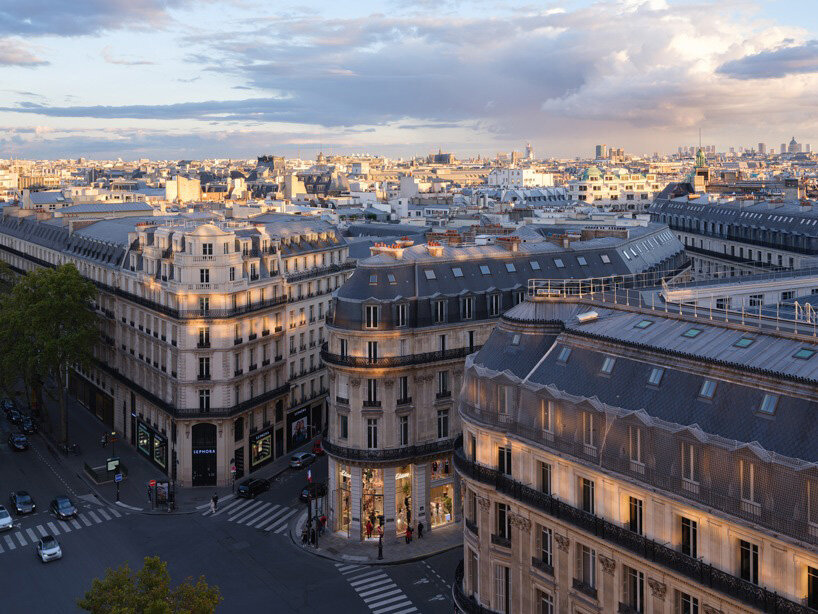
image © Ossip Van Duivenbode
the arcade becomes a theory of modern life
Several decades after Baudelaire, German philosopher Walter Benjamin returns to the flâneur while developing The Arcades Project, an unfinished study of 19th-century Paris in which architecture, commodities, advertising, fashion, literature, and urban experience are brought together as fragments of modern life. For Benjamin, the Parisian arcade becomes more than an architectural type, because it represents a larger transformation in the relationship between the city and its inhabitants, bringing together public movement and commercial display within an environment organized around looking. The arcade offers the flâneur an ideal setting, as it allows observation to take place alongside consumption, producing a peculiar tension between the detached pedestrian and the commodity world surrounding him. The flâneur appears to move freely through the city, yet the city he observes is increasingly organized by commercial interests, with shop windows and displays turning objects into images before they become purchases.
Benjamin’s reading complicates the romantic image of the solitary urban wanderer, revealing how spectatorship is entangled with the emerging culture of commodities. To look at the modern city is also to encounter a system designed to attract attention, desire, and consumption, meaning that the observer who believes he is simply watching may already be participating in the economic and visual structures that shape what he sees. This is one reason the flâneur remains useful beyond the specific streets of 19th-century Paris, because the figure provides an early model for understanding how urban environments can turn everyday movement into a form of spectatorship.
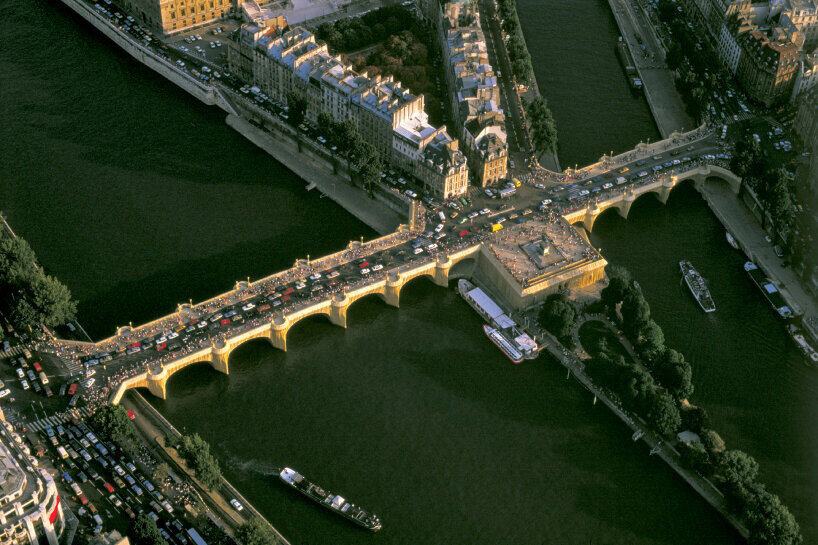
Christo and Jeanne-Claude’s Pont Neuf Wrapped, Paris, 1975-85. Courtesy of Christo and Jeanne-Claude Foundation | image by Wolfgang Volz
from flâneur to modern spectator
During the 20th century, this relationship between urban space and spectatorship expands far beyond the street, as cinema, photography, advertising, radio, television, illuminated signage, exhibitions, and mass-produced images introduce sophisticated ways of directing attention. The experience of the city becomes inseparable from a wider visual culture in which architecture is encountered alongside images of architecture, products are experienced through advertising, and public space becomes a surface for communication as much as a place of movement. The spectator no longer needs to physically wander through the city to encounter its images, while the city itself becomes mediated through technologies of representation. The boulevard, arcade, and department store establish early conditions for this transformation by bringing movement, commerce, and visual attention together, while later forms of media extend the same logic across increasingly large distances.
The flâneur can therefore be understood as an early prototype of the modern urban spectator rather than as a historical figure who simply disappears once the 19th century ends. His particular form of walking may belong to another era, but the underlying activity of observing, interpreting, and consuming the city through images continues to evolve as new technologies and spatial environments change the conditions of urban experience.
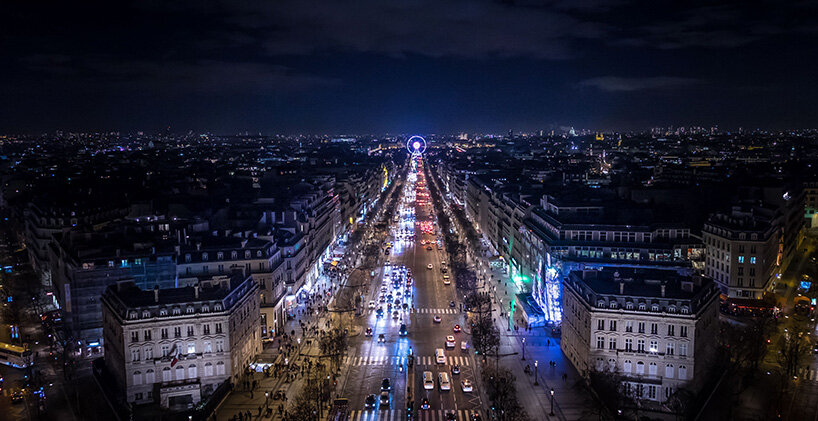
image by Maximilian Orlowsky
when the observer becomes part of the image
The contemporary city allows the spectator to become a producer and distributor of images at the same time, so that walking through an urban environment increasingly involves not only seeing but photographing, recording, sharing, tagging, mapping, and publishing what has been seen. This changes the position of the observer in ways that distinguish contemporary spectatorship from the classical flâneur, since the person moving through the city is no longer necessarily anonymous or detached but may instead be consciously performing the experience for an audience. A street, building, café, installation, or public square can become part of the image as much as part of the experience, with people moving through the city while also thinking about how it will appear in a photograph or on a screen. The contemporary spectator is part of a much larger network in which urban experiences are captured and recirculated, creating a city that exists simultaneously as physical space and as an enormous collection of images. What began with the flâneur as an individual practice of looking becomes, through digital media, a collective and continuously updated form of urban spectatorship.
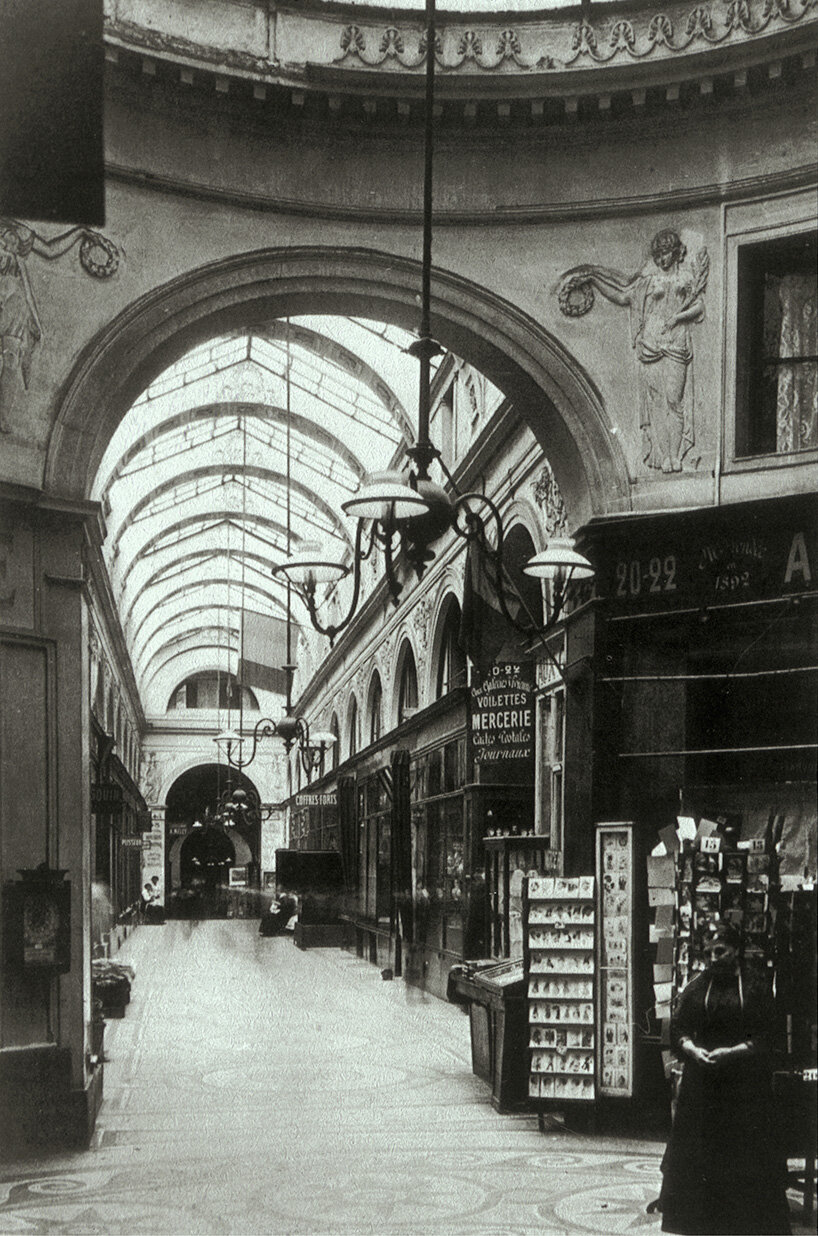
Galerie Vivienne – interior, 1905 | Brown University Library, Public domain, via Wikimedia Commons
designing the gaze
The spaces of the modern city have always had a role in shaping the way we look, whether through the long views created by Haussmann’s boulevards, the shop-lined passages of the arcades, the café terraces that turn the street into something to be watched, or the department stores that bring pedestrians into carefully arranged worlds of displays and commodities. What changes over time is the ways in which that relationship is presented and mediated, from the shop window and the museum interior to the illuminated facade, the digital screen, and the camera in our pockets.
This is where the flâneur remains useful as a way of thinking about urban experience, because his wandering is less important than the attention he gives to the life around him. The city becomes something to observe while moving through it, and that habit has become so familiar that it is easy to overlook how much the spaces contribute to what we notice, where we stop, and what stays in our view. The flâneur belongs to a particular moment in the history of Paris, but the condition he represents has continued to develop as cities have become shaped by commerce, media, and technology. We still move through streets, although the experience now extends into the images we make of it, leaving the modern pedestrian somewhere between observer and participant, moving through a city that is constantly presenting itself as a spectacle.
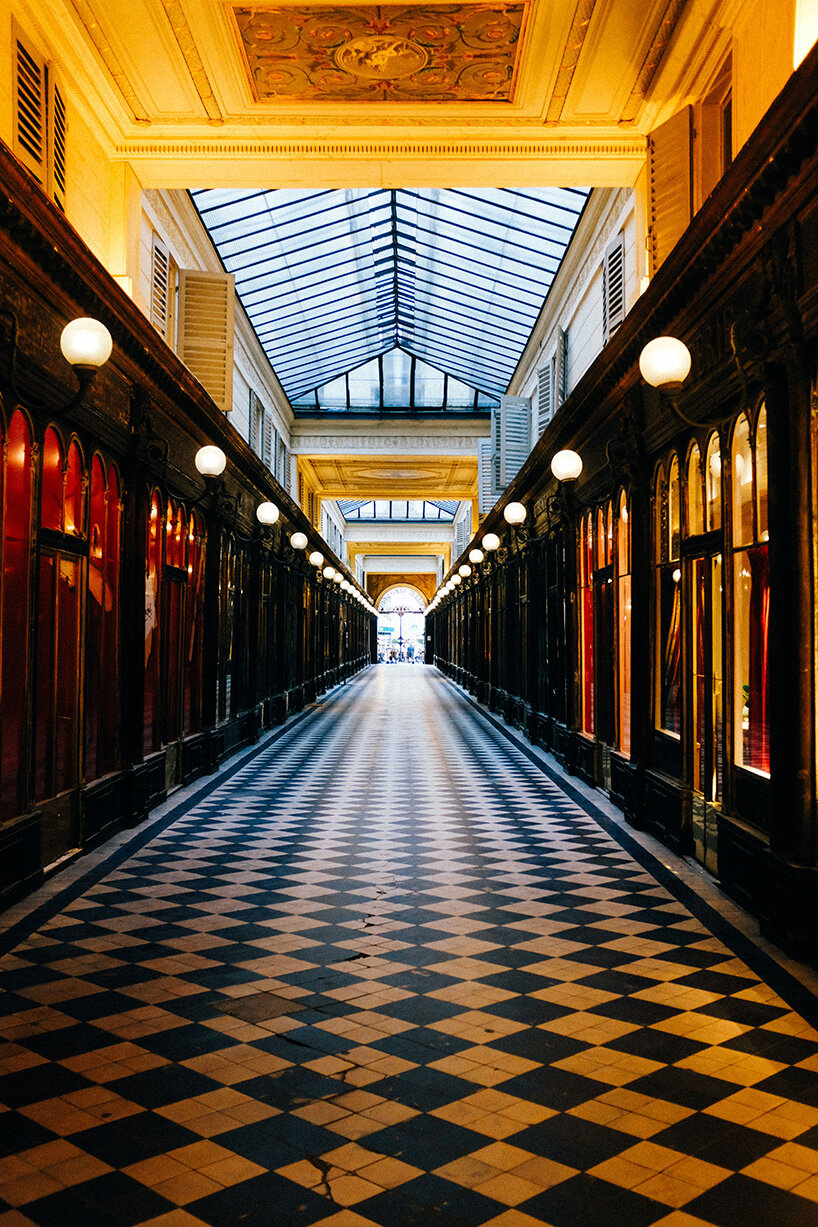
image by Adrien Olichon
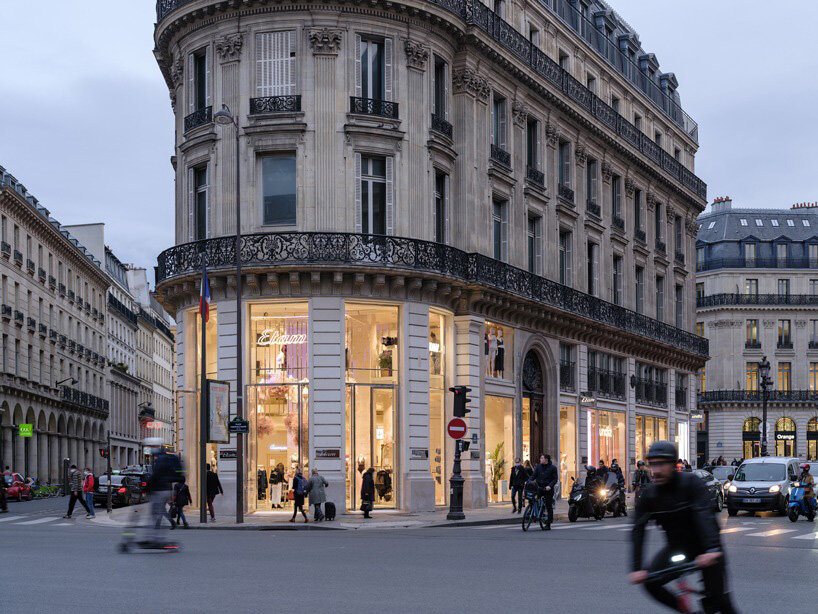
image © Ossip Van Duivenbode
This article is part of designboom’s SPECTATOR AND SPECTACLE chapter, asking how wonder gets built, presented in partnership with SolidNature, and how it might return some mystery to a world that has measured most of it away. Discover more stories that turn onlookers into participants, alter perception and disrupt the everyday here.
The post the flâneur and the birth of the modern urban spectator appeared first on designboom | architecture & design magazine.
Deixe um comentário