Tiffany Reid is a Who What Wear editor in residence, fashion executive, freelance stylist, and brand consultant who most recently served as the senior vice president of fashion for Bustle Digital Group. She recently launched a YouTube series, Tried + True, in which she walks viewers through the latest trends.
Early this summer, we decided to retire our son’s nursery and transition him to a big-boy room. For many reasons, the first major one was the urgency to foster his independence while sleeping (instead of co-sleeping with us), and the second was the need for him to play freely and safely in his room.
We had no idea time would go by this fast, and although all parents warned us, we could never know how time truly flies until we experienced it ourselves. As we watch him grow at an unbelievable rate, I’ve realized that a beautiful nursery doesn’t necessarily work for a busy, curious little person who climbs, plays, owns (what feels like) a million things, and wants more independence. The number of toys he’s acquired since birth was both admirable for him and embarrassing for us as parents. We needed a serious purge!
Creating a space that was stylish, functional, and safe was a priority for us, and my blind ambition made me think this process would be easy and fast. After a longer-than-expected, bumpy road, we finally made it out of the trenches months later, but we had to tap into our network of interior designers and experts to help along the way. Here’s the journey from the beginning to our final destination.
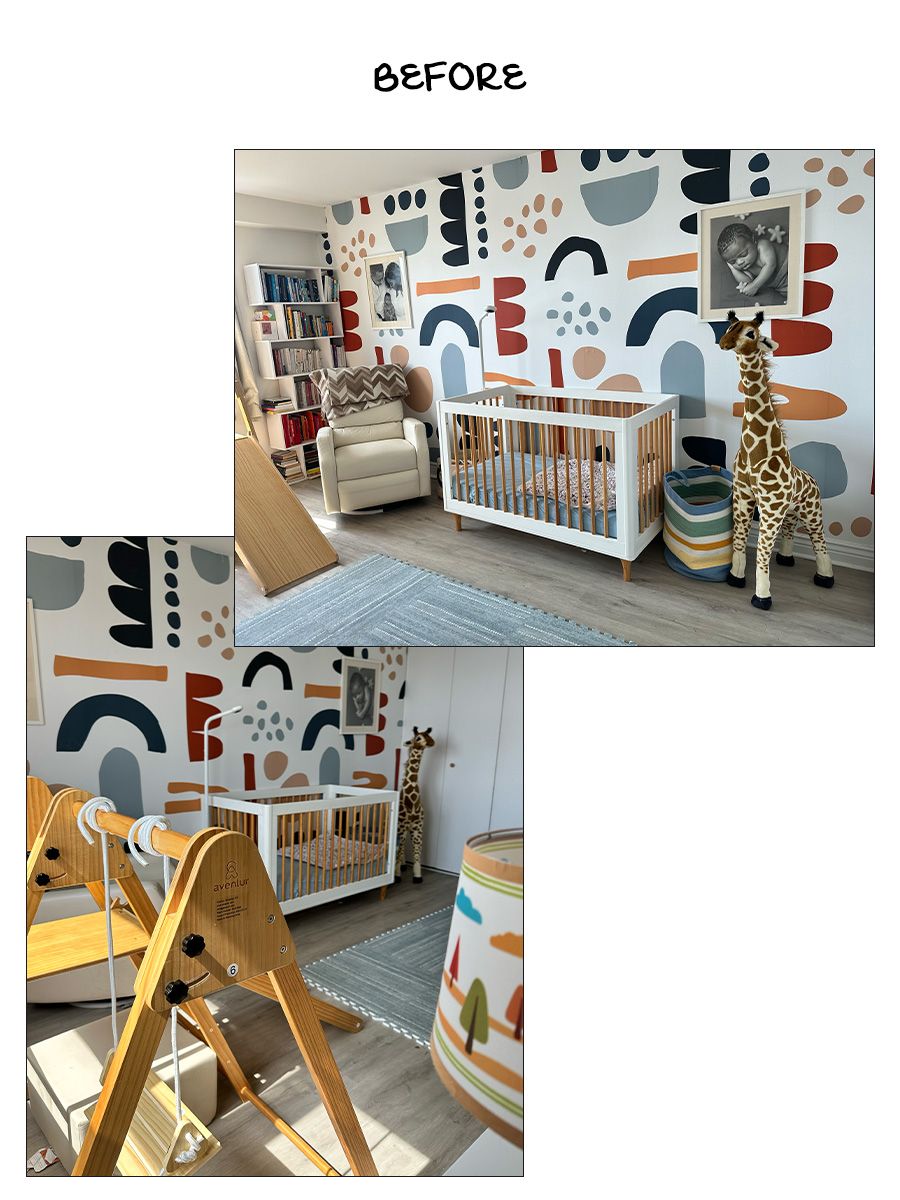
Shortly after jumping into this project, I knew I needed to call in reinforcement for organization and a schedule. I phoned a friend and decided to tap interior designer Bridgette Grant to help us on this journey. Her suggestion was to start with the foundation, which, to her, meant the room’s color and mood and understanding how furniture would work in the space.
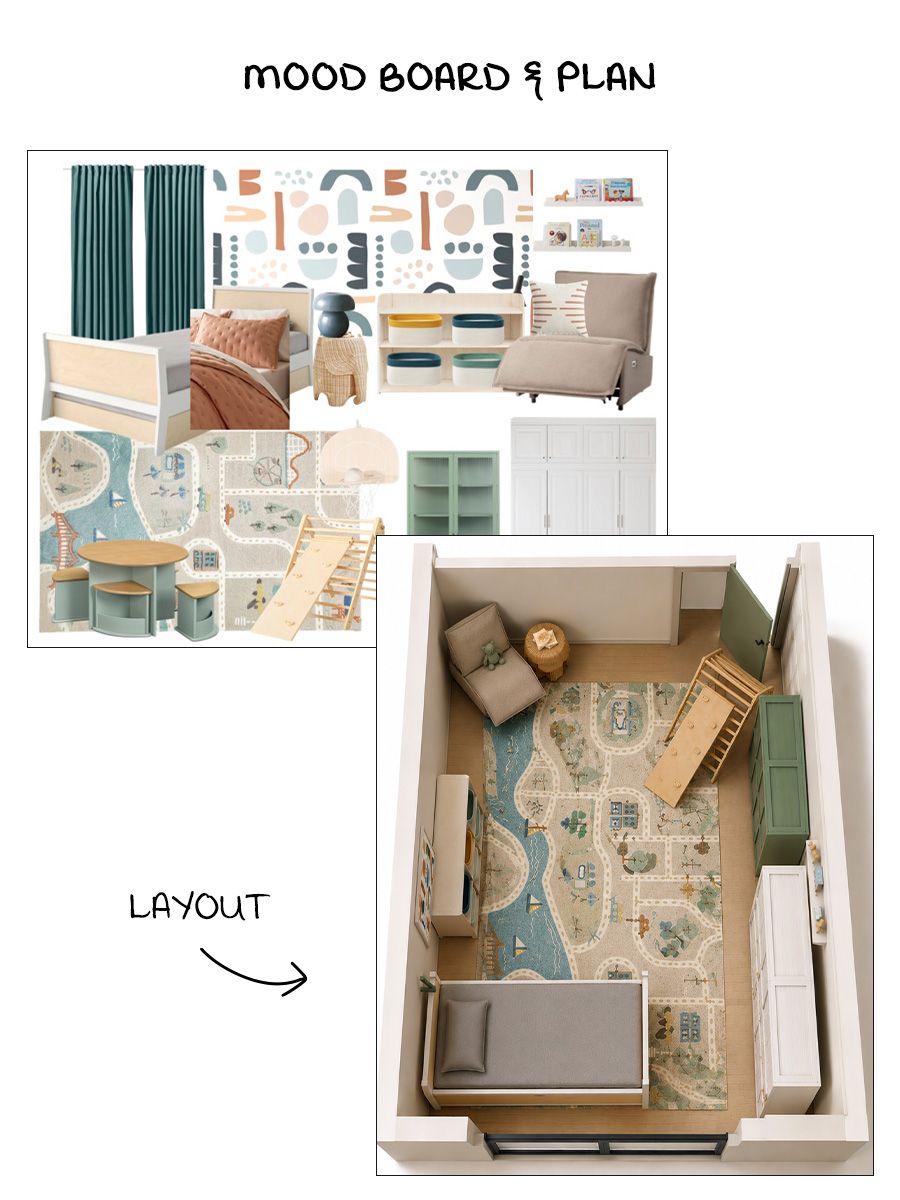
“As children grow, their rooms often need to evolve beyond the nursery without feeling overly mature. Color can help bridge that transition,” says Grant. She created this mood board for us and mocked up what the potential furniture would look like in the room. We emphasized how important it was that the furniture wasn’t too overwhelming since it is a modest-sized room.
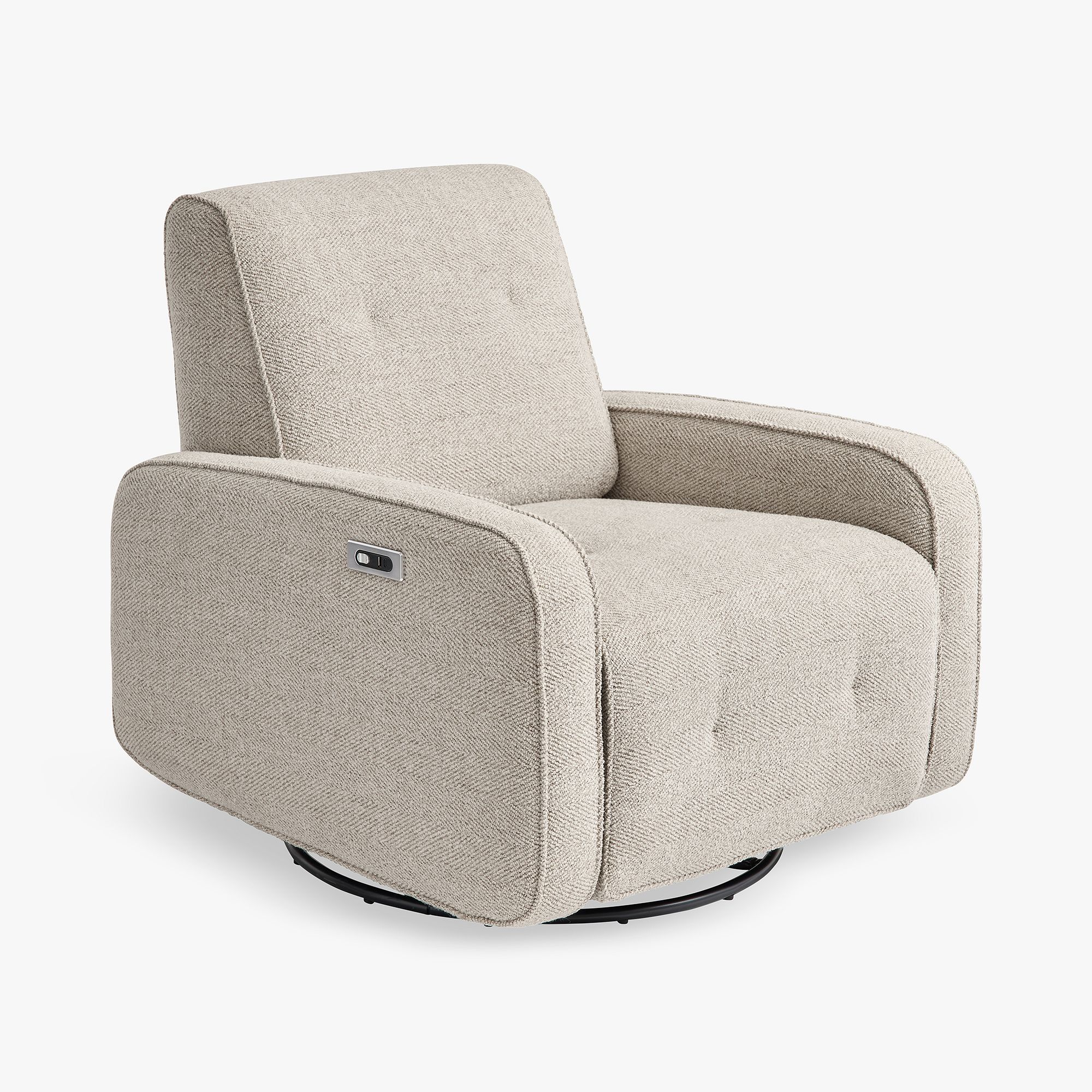
We also wanted him to have his independence to play safely and alone in the room. One thing that jump-started the urgent need for this makeover was a series of incidents catching him right before an accidental fall. Specifically, leaning on the recliner chair to give him height and leverage to climb up the bookshelf… Yup, you heard that right. I caught him hanging for dear life from the bookshelf. So she kept all this in mind and drafted this layout.
7 Tips On How to Upgrade a Nursery Into a Toddle Room
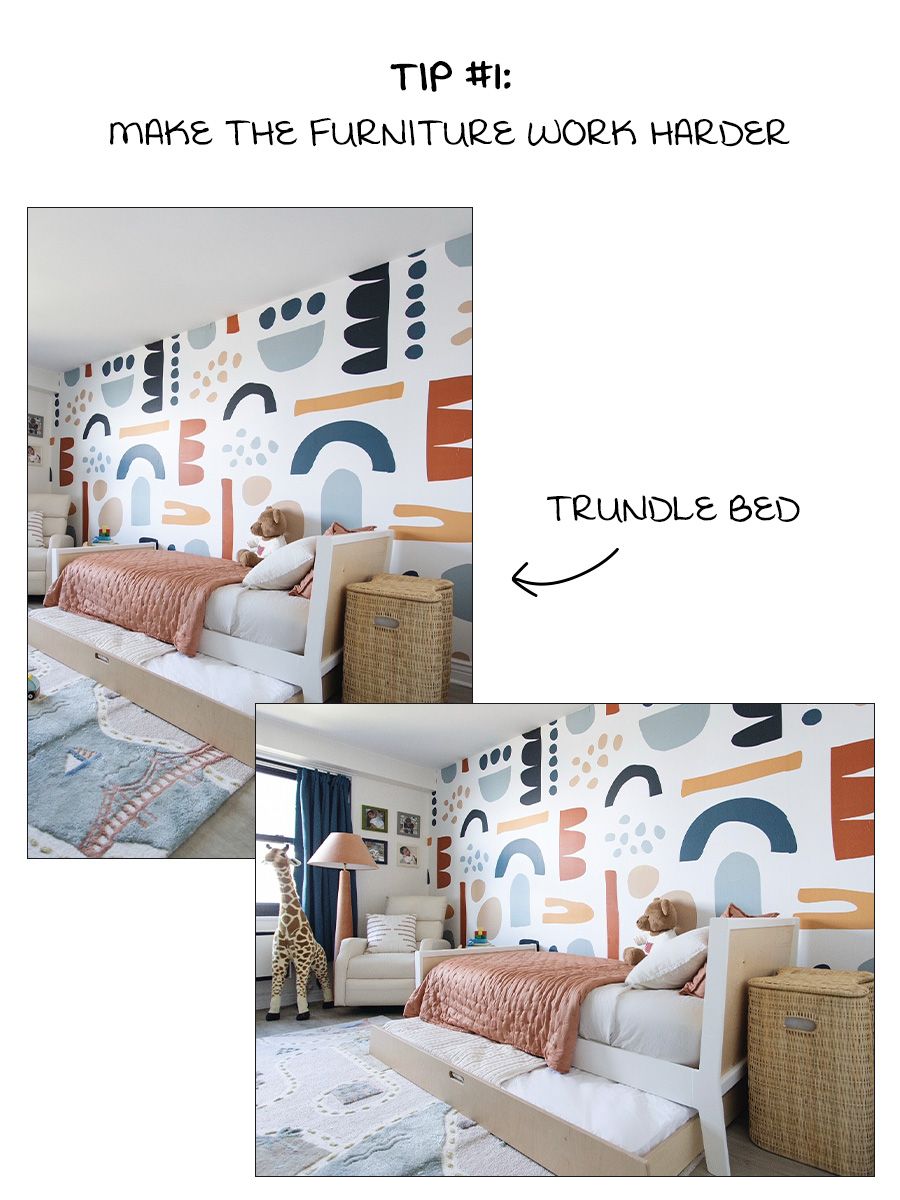
Grant’s Designer Tip: Choose furnishings that create comfort and security, such as upholstered beds, canopy details, bed nooks, and soft, layered textiles. If space allows, a trundle bed adds flexibility for both children and parents.
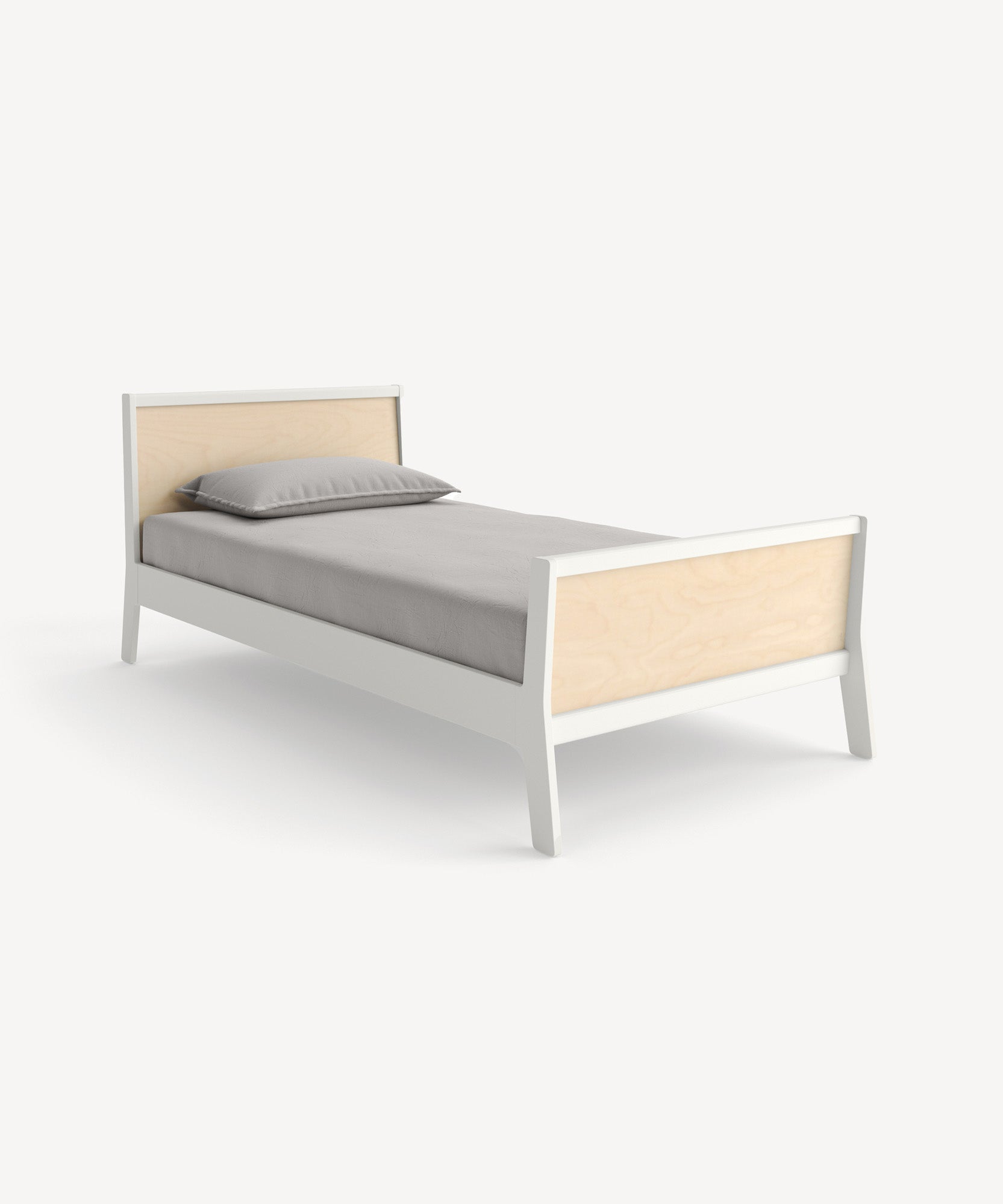
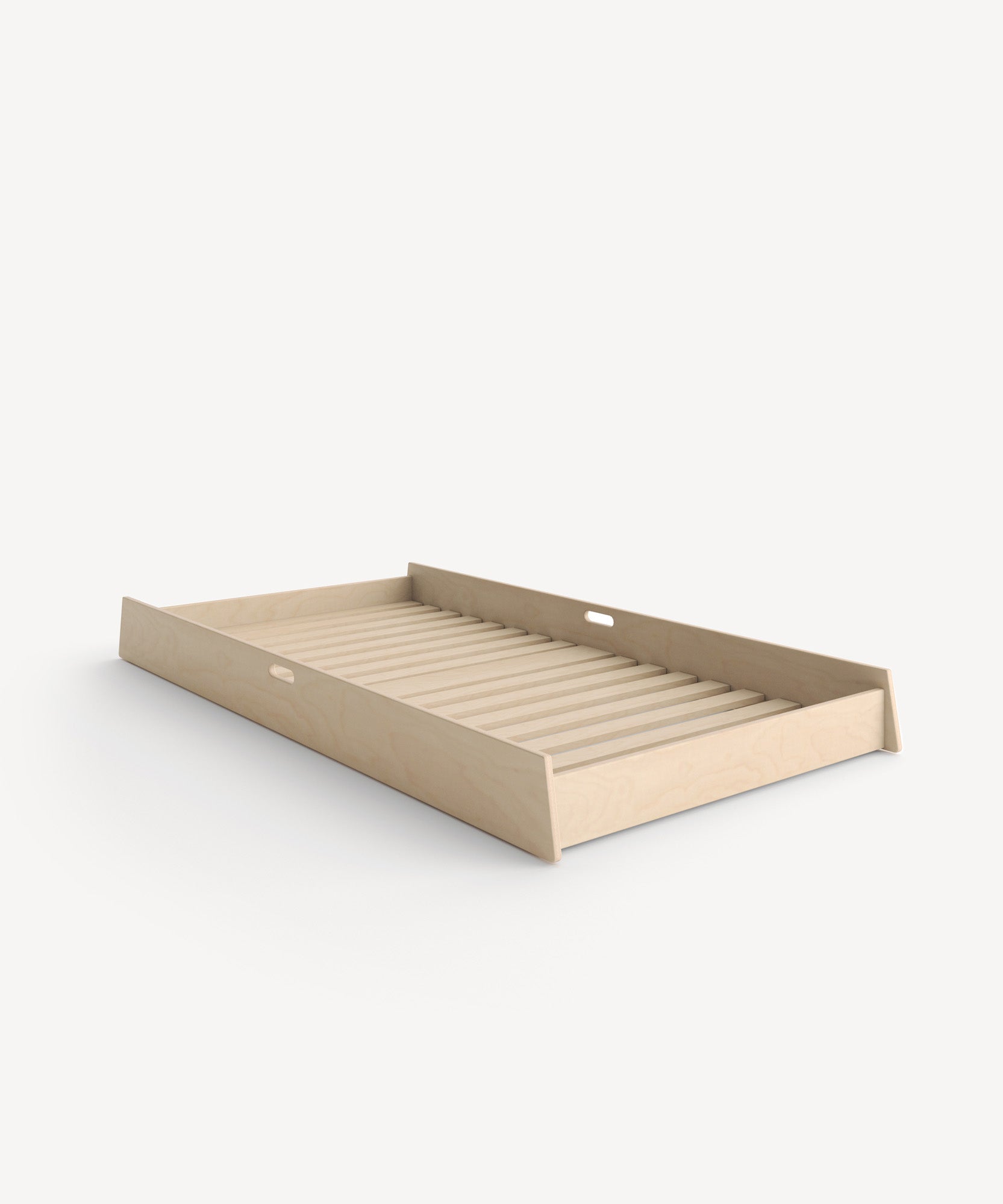
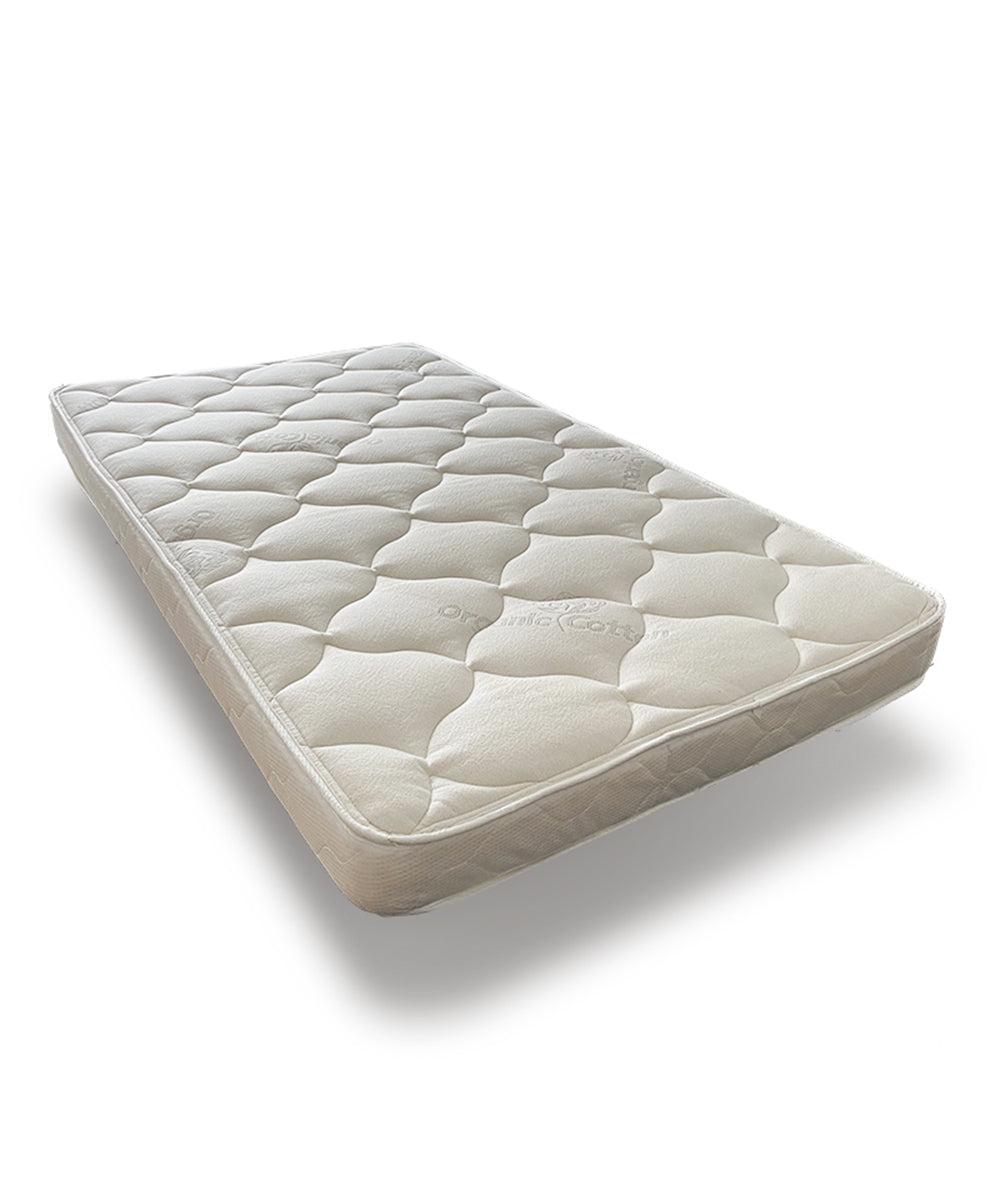
Transitioning from a crib to a “big-boy bed” is a major milestone, and we weren’t convinced we were ready. We knew for sure that we were done with co-sleeping and needed to set some sleeping boundaries ASAP. We knew the bed should support more than sleep. It becomes a place for reading, cuddling, sick days, sleepovers, and the occasional night when parents like us end up in the room. Not to mention, I tried sleeping on the crib mattress once and felt so sorry for my baby. Randi needed a mattress upgrade badly.
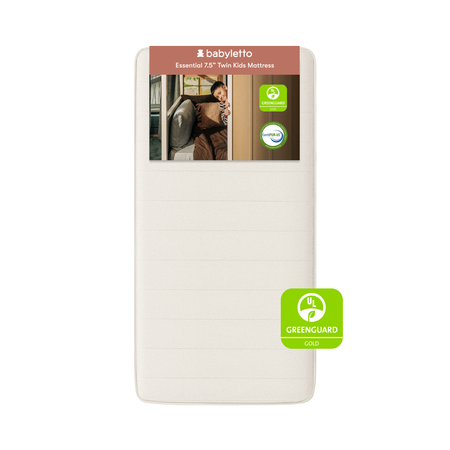
So we opted for a trundle bed from Oeuf and a mattress from Babyletto. “The trundle is a very simple idea: an extra bed when you need it and no footprint when you don’t. It’s about making furniture work harder so it can adapt to the changing needs of a family without adding another piece of furniture,” said Sophie Demenge, cofounder of Oeuf. It did not take much convincing for us to see why this was an absolute necessity for his room upgrade.
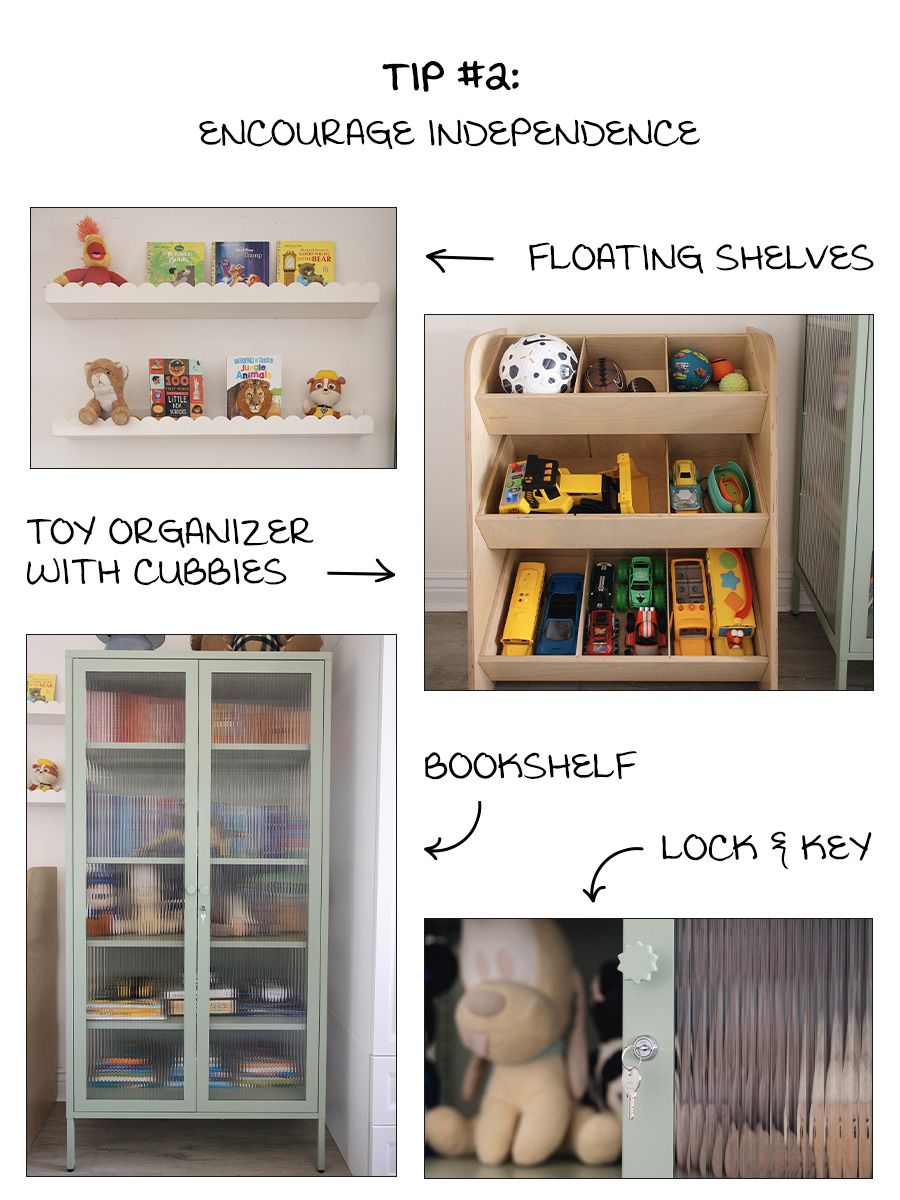
Grant’s Designer Tip: Incorporate accessible bookshelves, child-height hooks, easy-to-reach storage baskets, and a night-light they can operate independently.
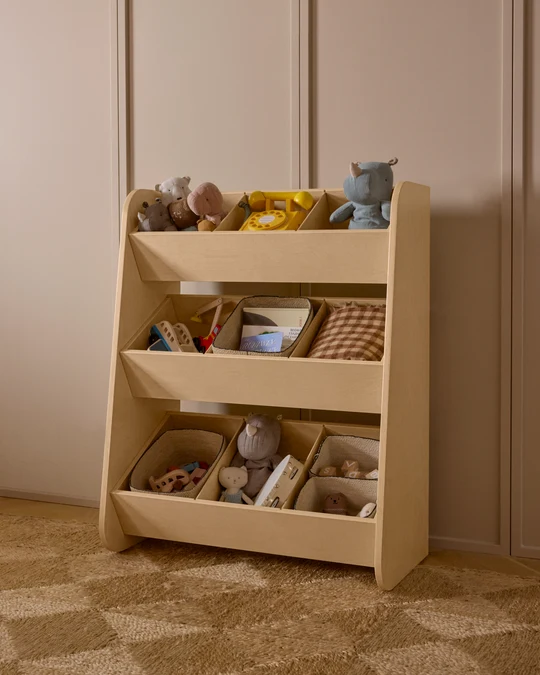
Randi has quickly shown us he was ready to be independent the week of his first birthday when he magically knew how to walk all on his own. As toddlers grow, their rooms should empower them to participate more fully in independent daily routines. We wanted to encourage this independence while keeping him safe. While it was impressive to watch him use a chair to grab his books, we still needed to course-correct, and because Randi has about 100 cars (no exaggeration), we needed somewhere to store them all with easy access for him. We chose a Piccalio Toy Organizer to do just that. The Toy Organizer offered us functional toy storage and adjustable cubbies, making it easy to store everything from blocks to balls, cars, and more.
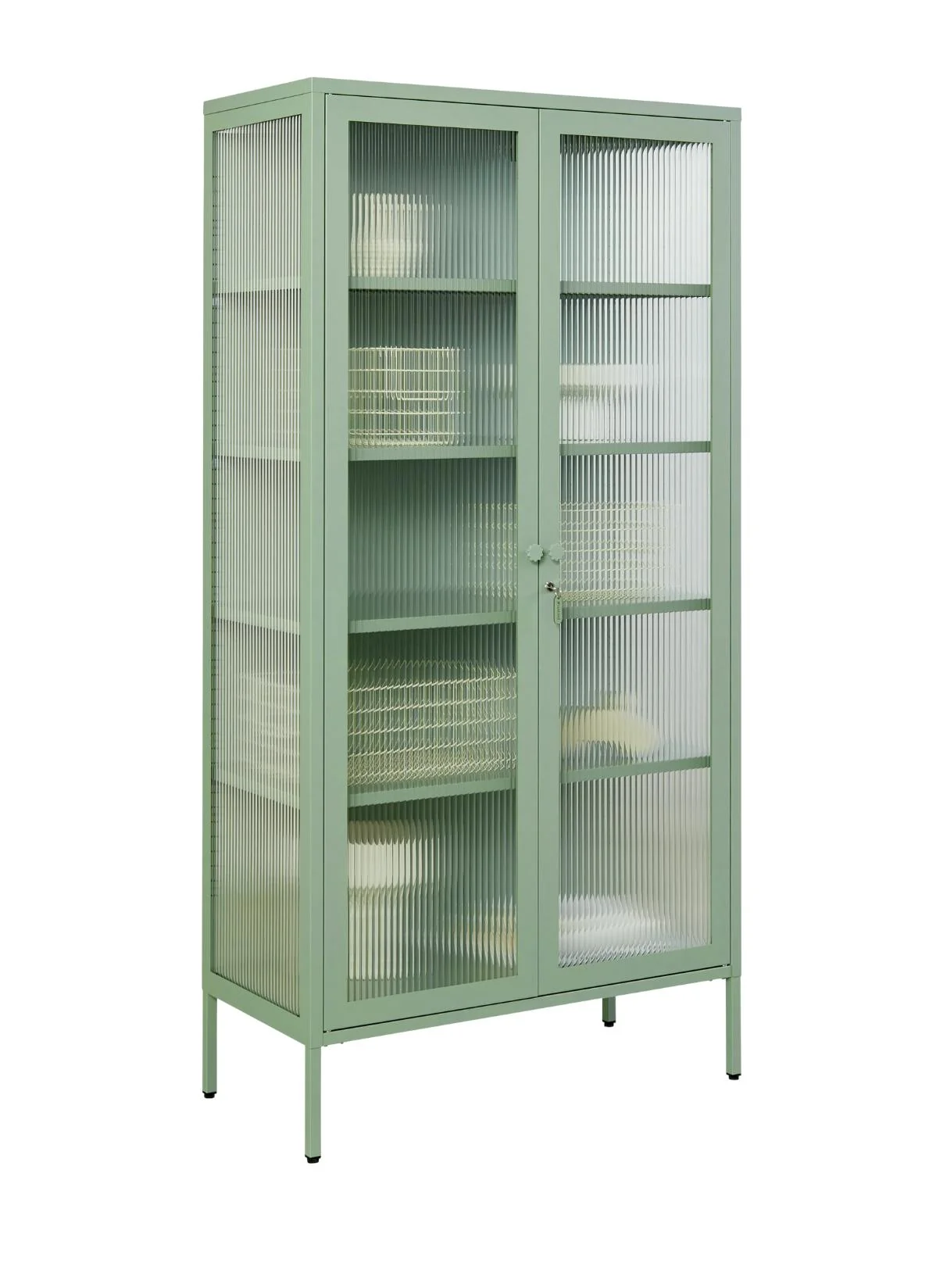
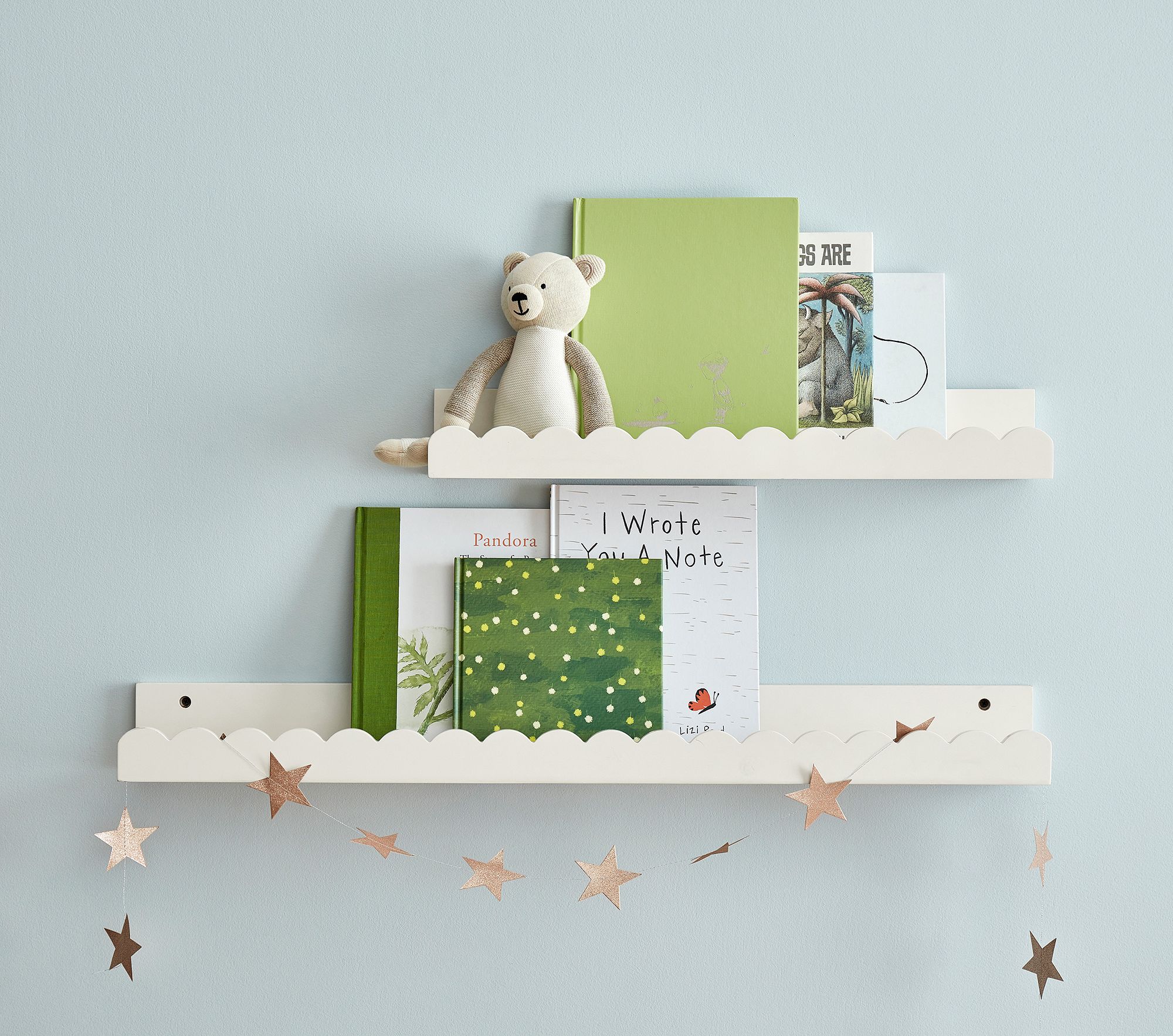
I love the aesthetic of having books in plain sight, and this was something I wanted to keep. We decided to put in floating shelves high up to encourage him to ask us to reach them for him. We loaded the rest of the books into the Mustard Made Sage Locker with doors and a lock and key, giving him easy access while also setting boundaries when we didn’t have eyes on him.
“At Maisonette, we’re always looking for pieces that are not only beautiful but designed to actually keep up with kids. The Mustard Made storage is a great example. It’s made durable and easy for kids to access, so they can start taking ownership of their space, while the lock gives parents a little extra control when they need it,” said Sylvana Durrett, cofounder of Maisonette.
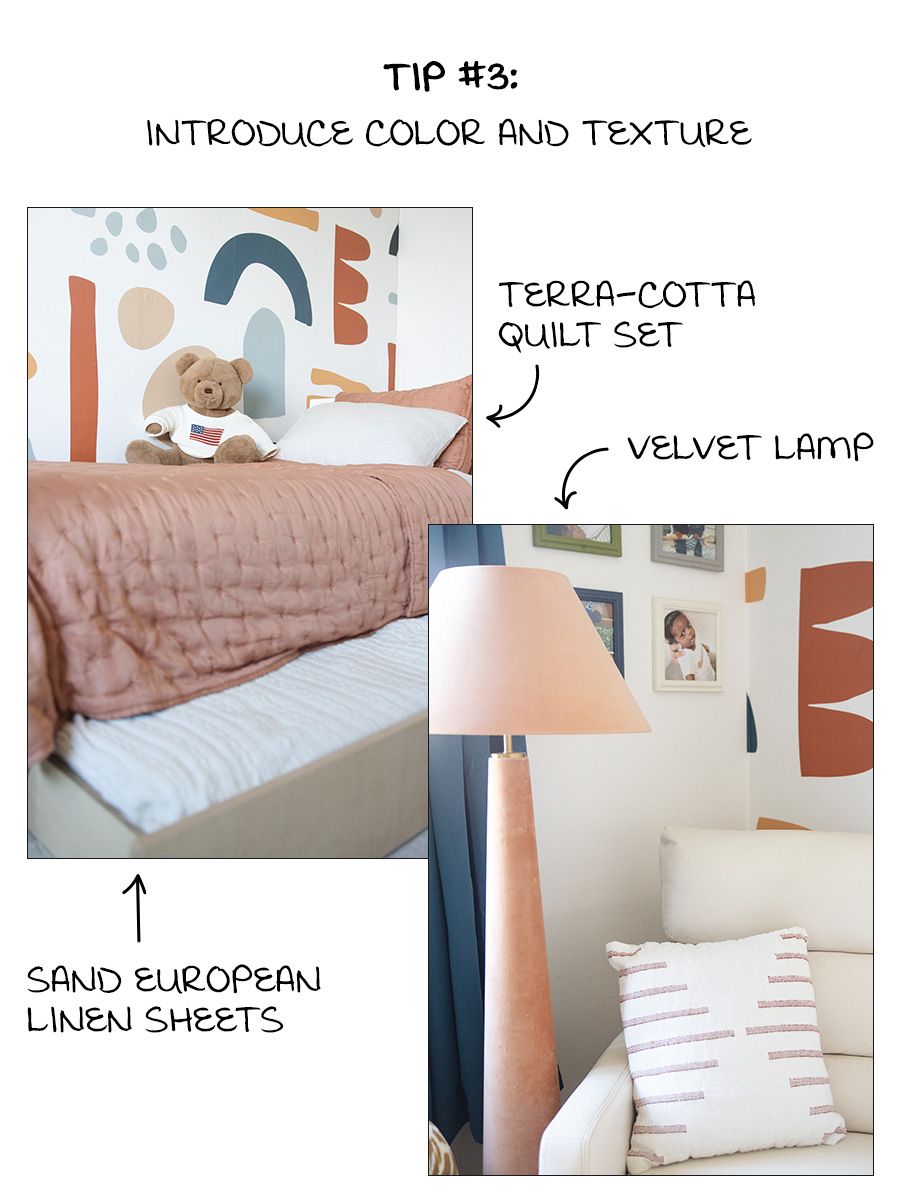
Grant’s Designer Tip: Don’t be afraid of brighter colors and playful patterns, even on large surfaces like walls or bedding.
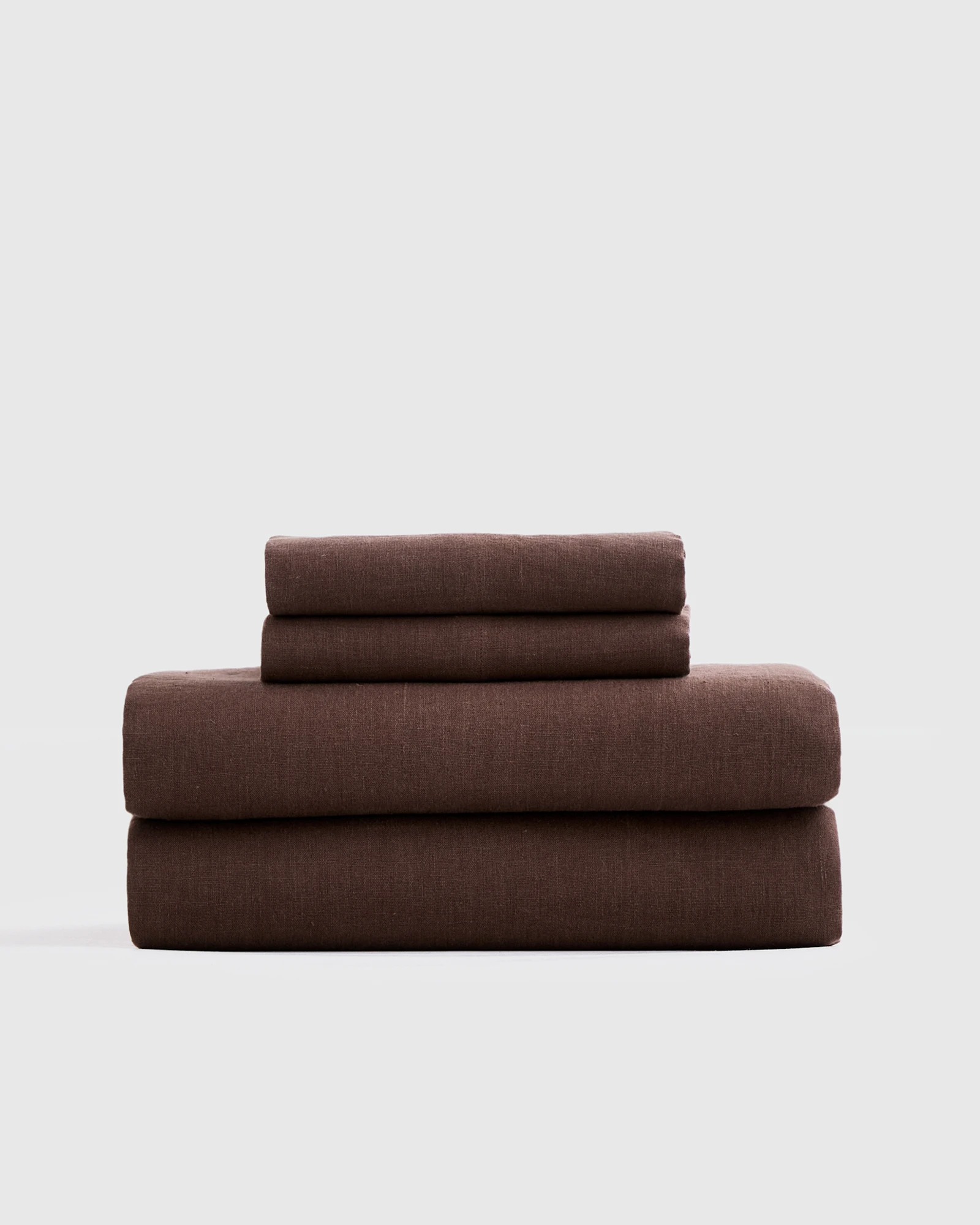
Once we had the basics locked in, like the layout, it was time to jump into the fun stuff, like color. Danielle Hurhula, VP of home merchandising at Quince, held my hand as I chose colors. She suggested, “A soft, warm neutral is the most forgiving foundation you can give a kid’s room. It makes the space feel cozy without dictating anything else in it.” So we opted for the European Linen Sheets in Sand. “The neutral base lets you bring in almost any color or pattern as they grow. From there, layer in playful color through accents you can rotate seasonally,” she said.
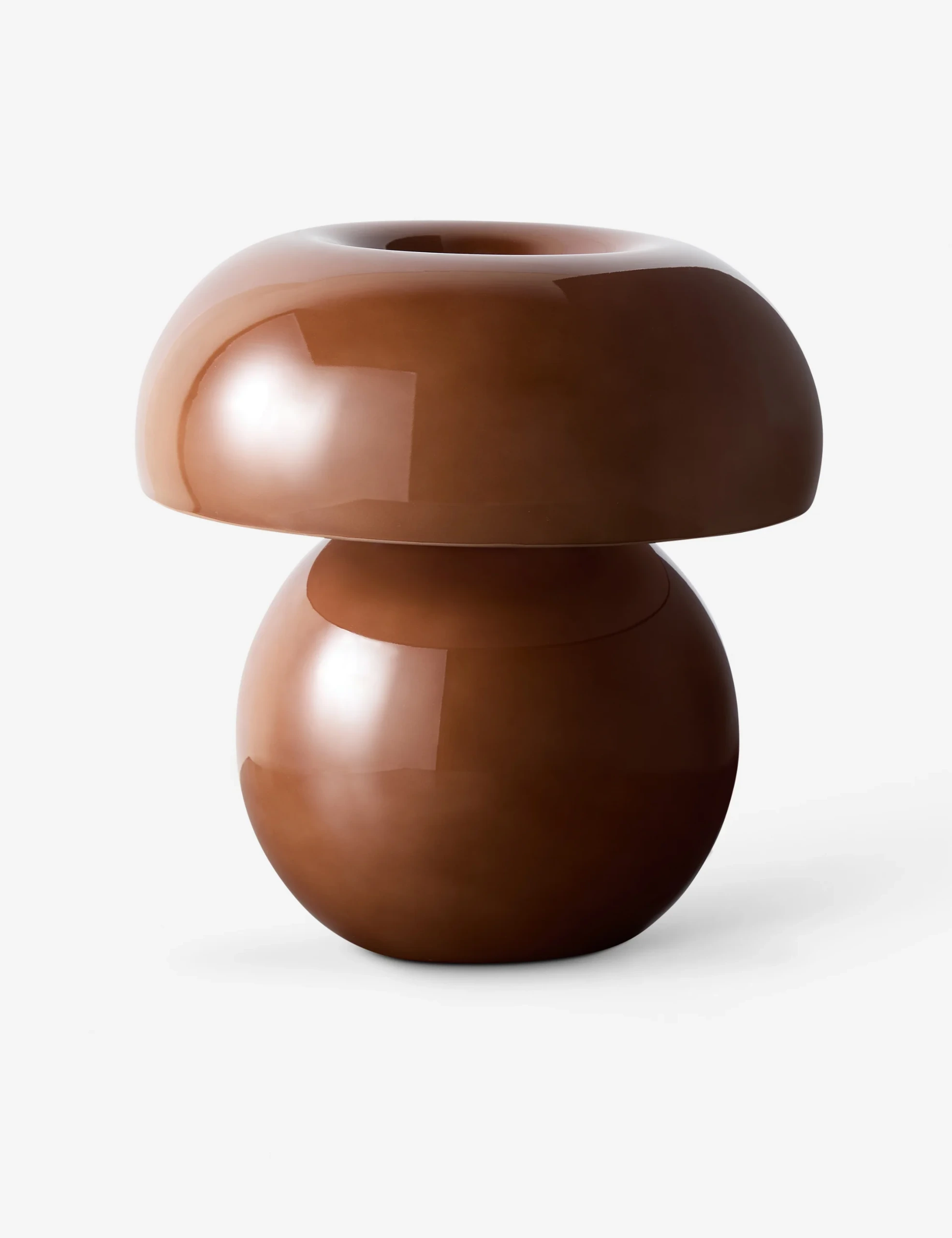
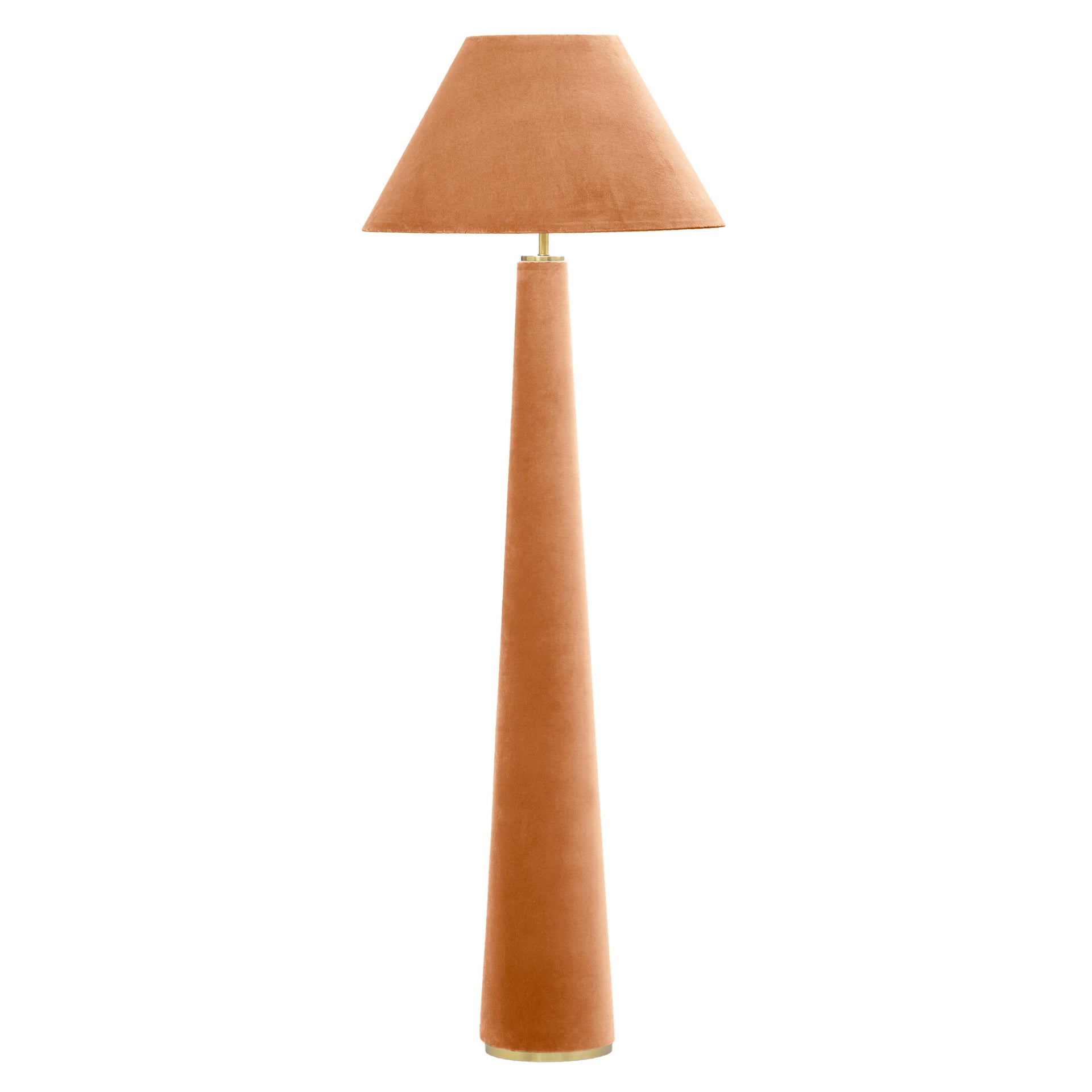
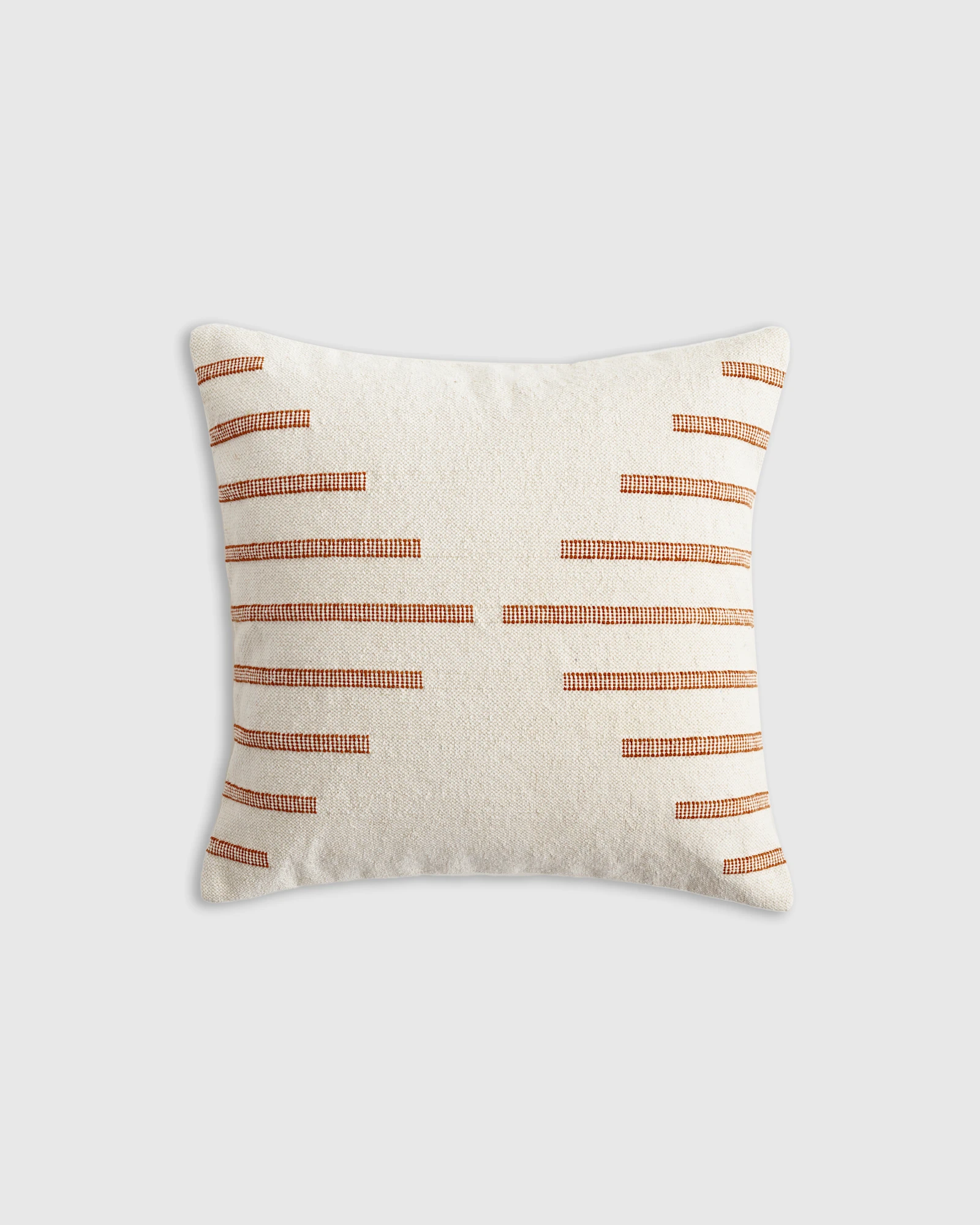
We wanted to stay away from blue, as that felt too cliché for a boy’s room, so we ran with this terra-cotta, started with a quilt set in the colorway, then sprinkled it in other layers through the room, like in accent pillows and this velvet lamp from TOV Furniture I am obsessed with. I love both the lamp’s soft texture and its soft, complementary tone.

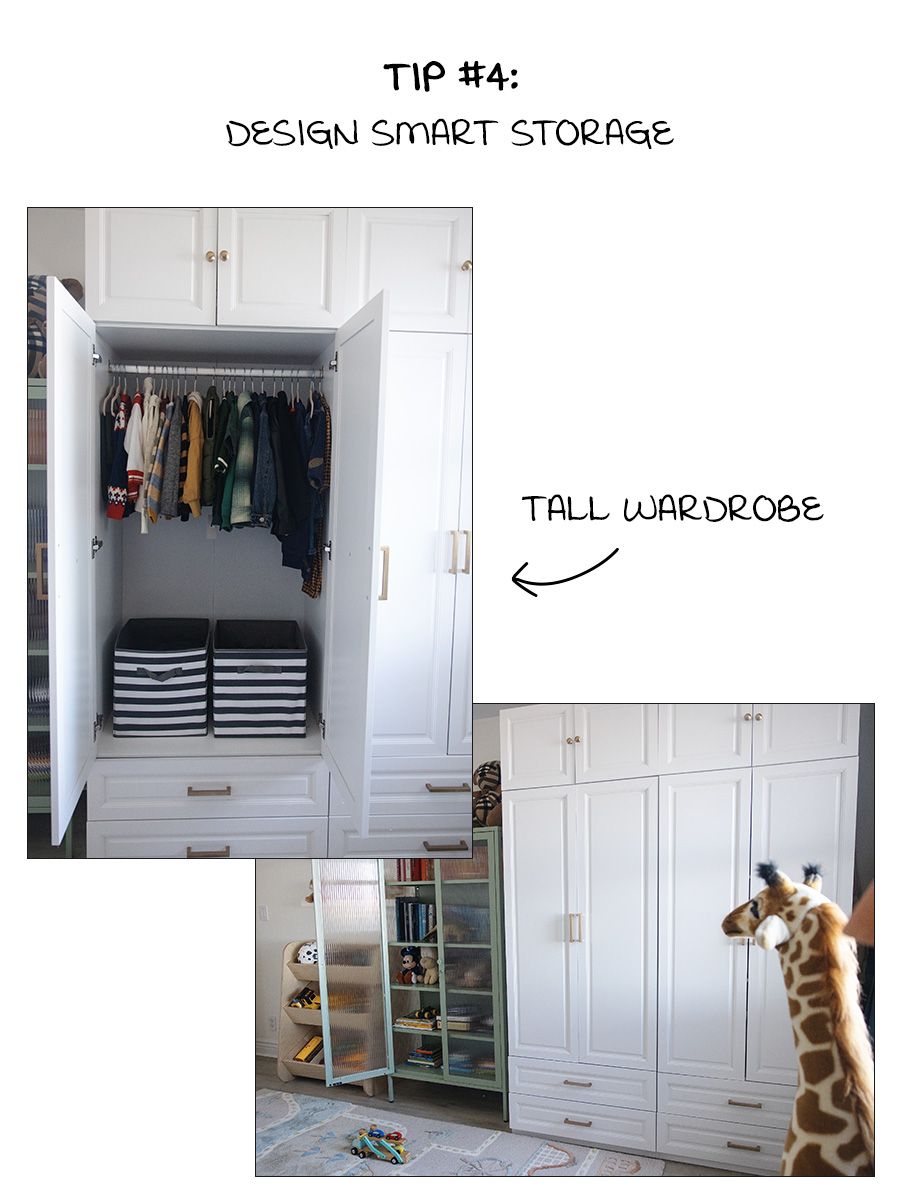
Grant’s Designer Tip: Consider closed storage or open shelves with matching baskets. Use pictures and labels to help growing toddlers identify where items belong and encourage independence.
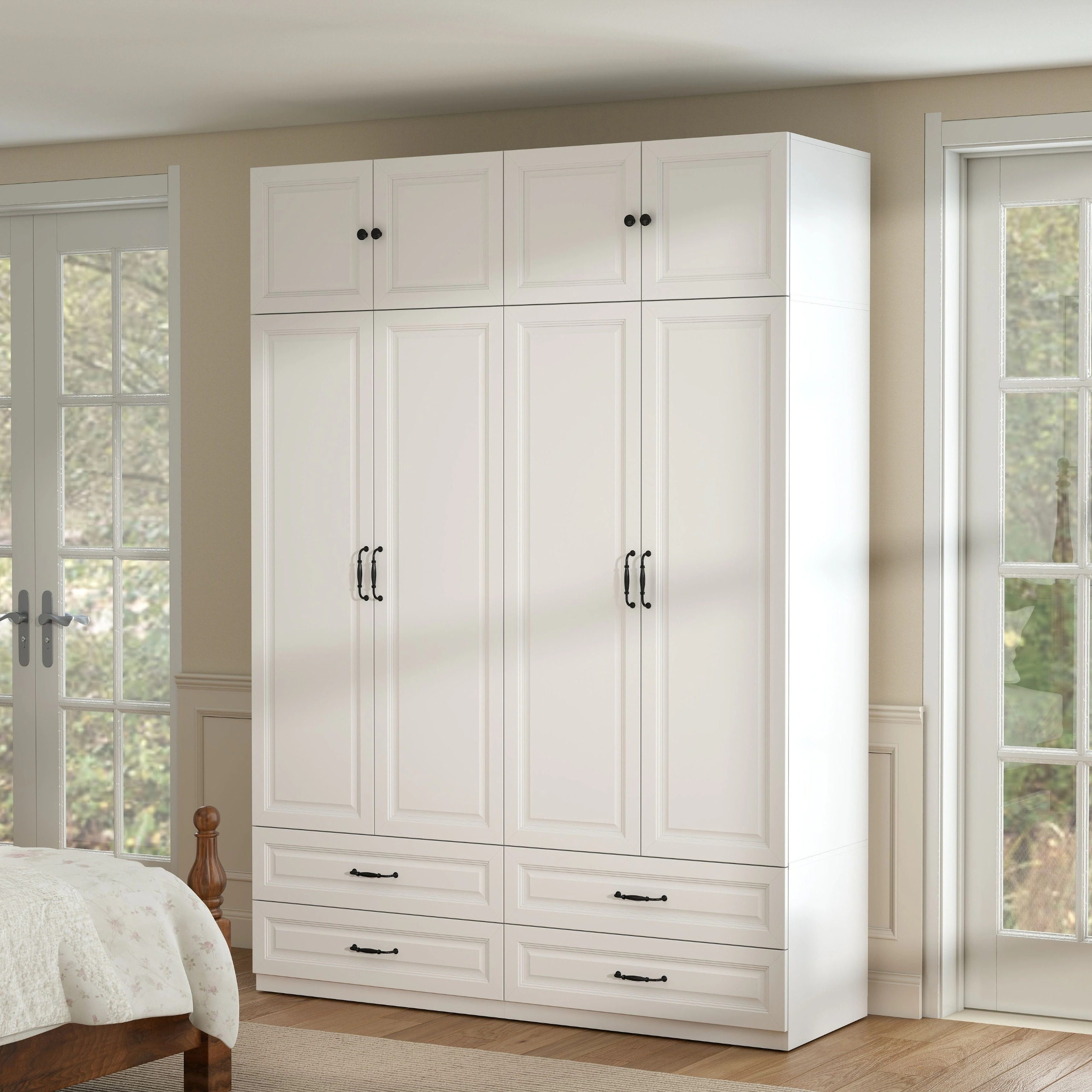
The storage solutions that worked for diapers and swaddles rarely work for toys, books, puzzles, dress-up clothes, and everything else toddlers seem to accumulate overnight. This meant we needed maximum storage in a modest space. This wardrobe from Overstock was exactly what we needed. We took advantage of the height of the room and opted for something very tall. We took away the photos on the wall and decided storage was a better use of that space. We organized it so he could access the things at the bottom, and the higher-up items were only for us to reach. The knobs that came with the original unit were swapped out to match the soft, neutral aesthetics of the room.
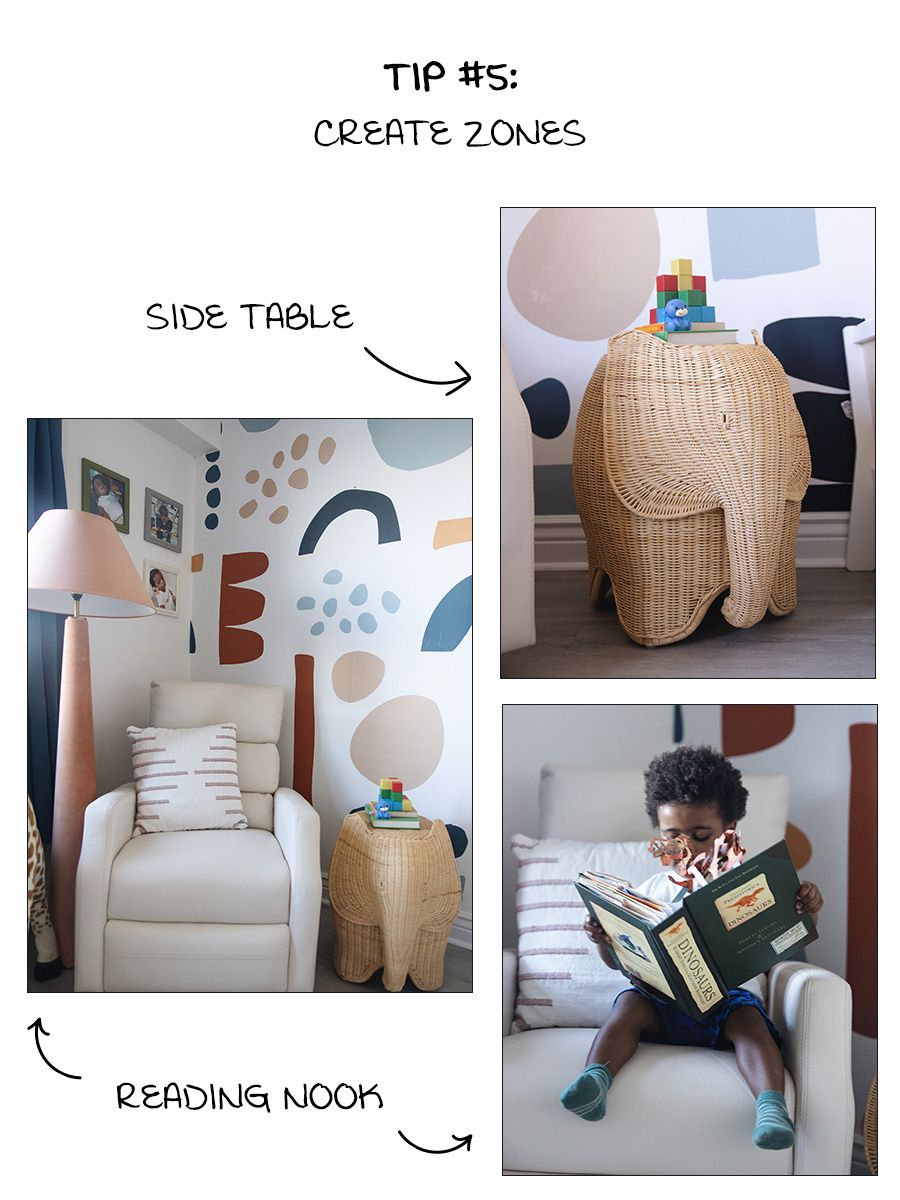
Grant’s Designer Tip: Create a dedicated sleeping area centered around the bed, a reading nook for quiet activities, and a separate play area for toys and creative exploration.
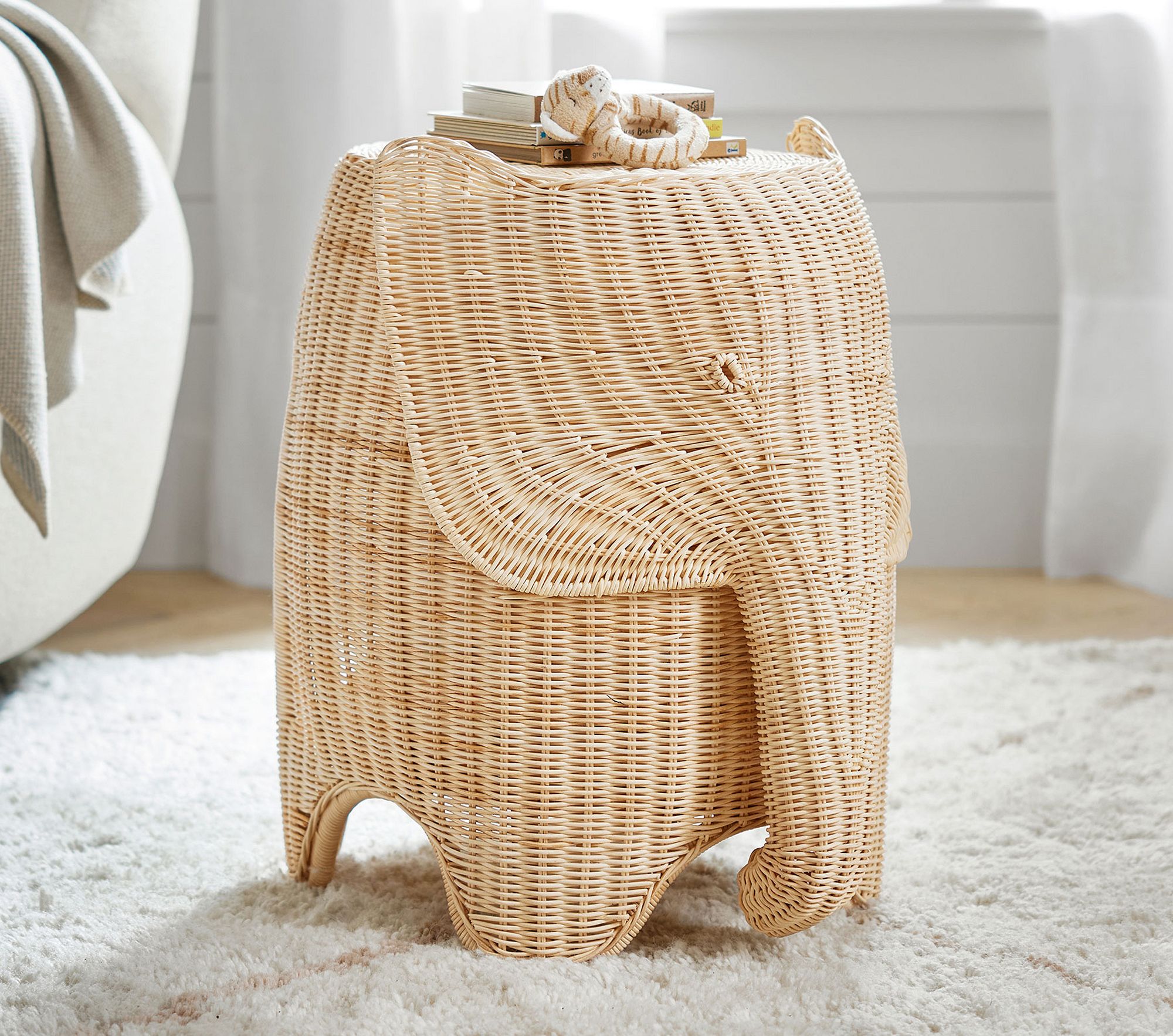
A reading nook was nonnegotiable for his room, as he loves to cuddle and read a book with his parents. It helps calm him when he’s overstimulated and adds quiet time before winding down for bed. We are lucky that he can really sit and focus on a book; the goal when creating this space was to nurture that. We fell in love with this little elephant table from Pottery Barn, as it has a hidden compartment in the back to store his frequently read books. Randi really took to the area. We wanted to create distinct zones for sleeping, reading, and play to help the room work better throughout the day. Because of this, we decided to create a play area outside of his room, which brings us to our next tip.
Grant’s Designer Tip: Focus on creating a room that feels calm, functional, adaptable, and welcoming rather than striving for perfection. The best toddler rooms aren’t just beautiful—they anticipate toy explosions, changing interests, story time, sleepovers, sick days, and growing independence.
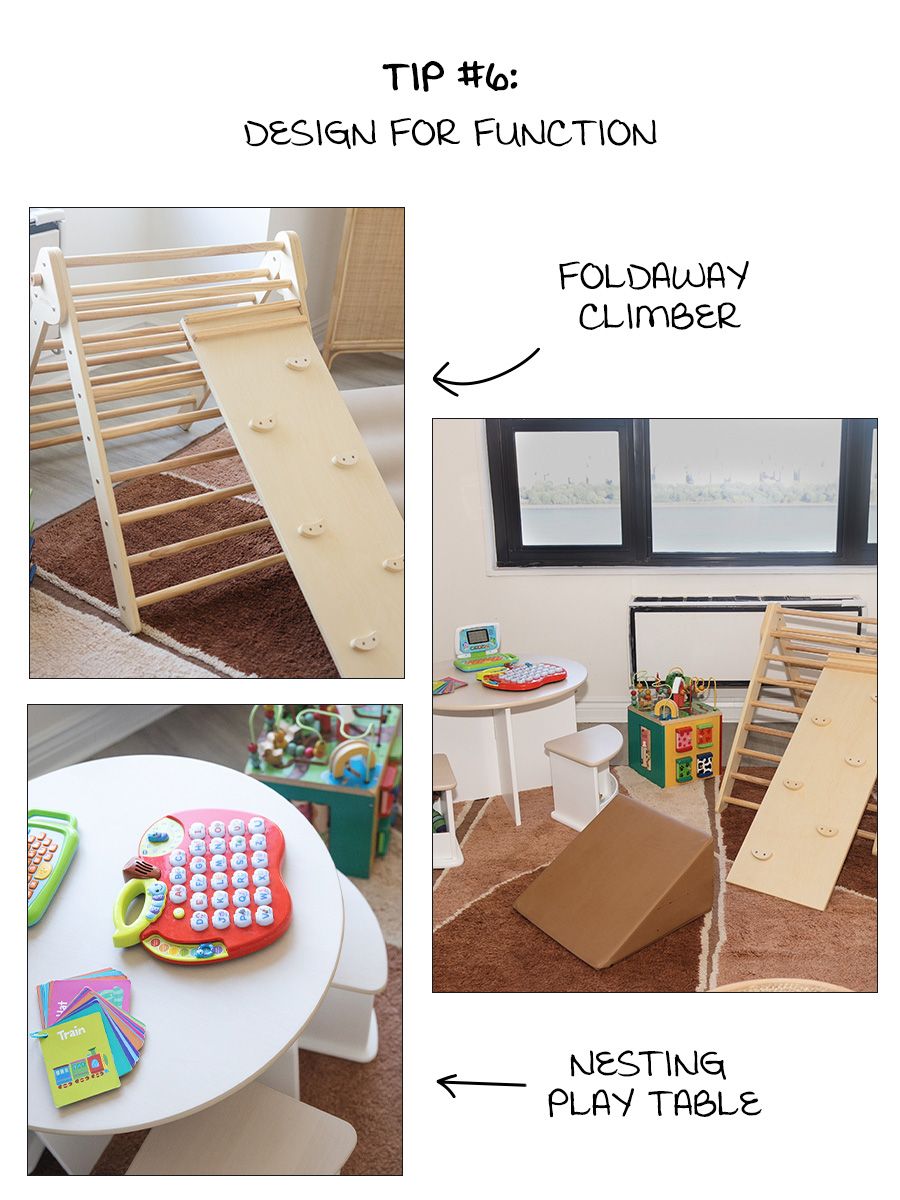
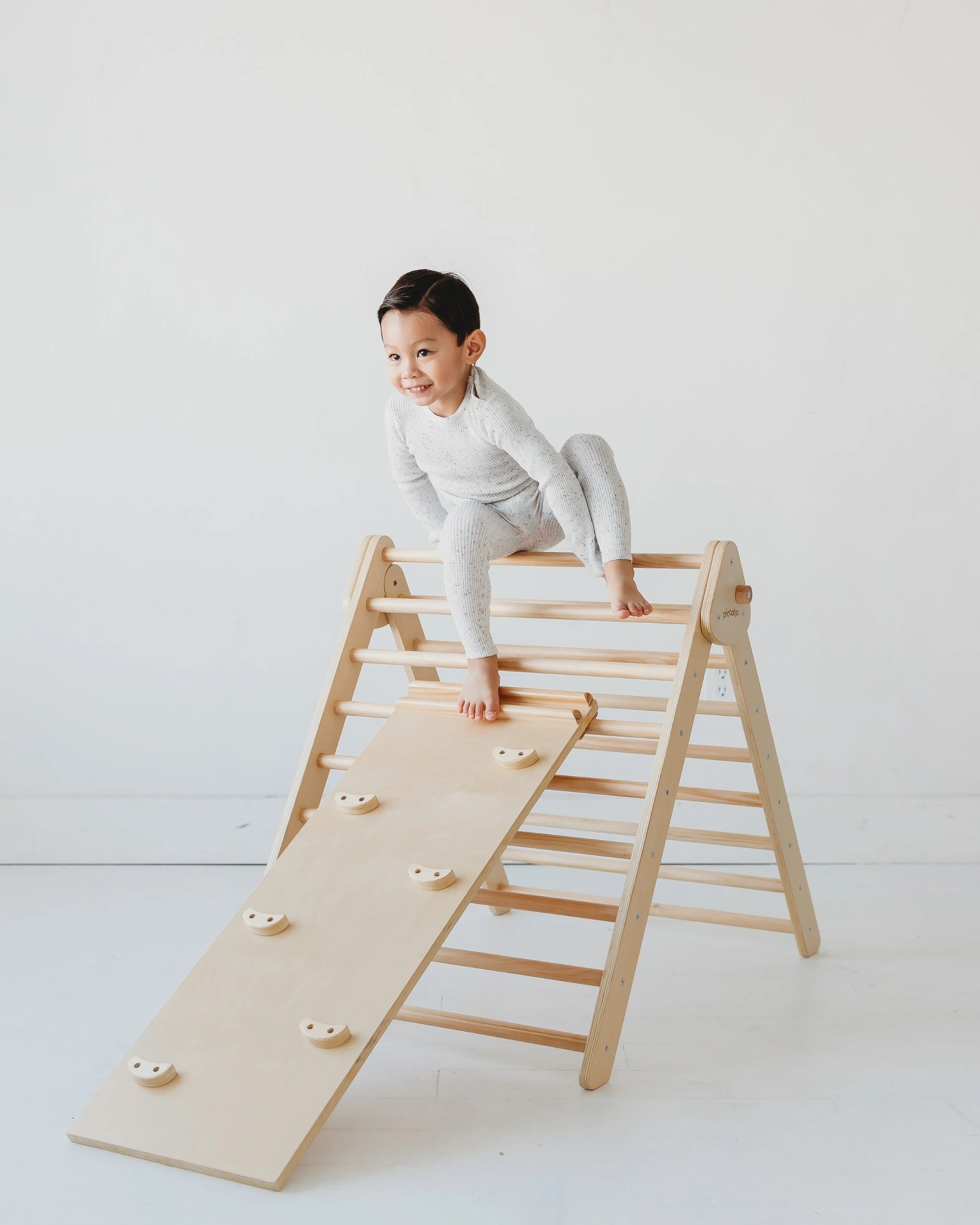
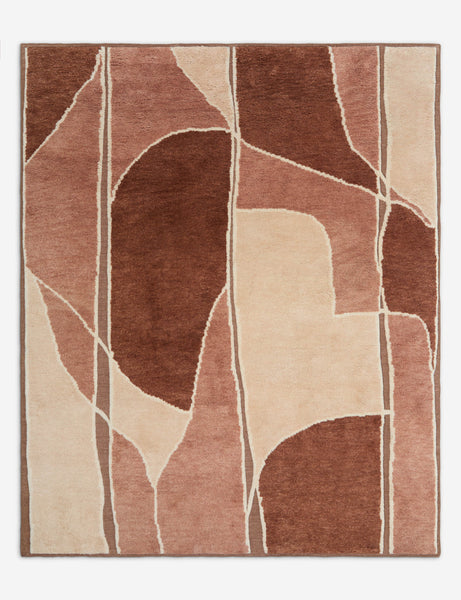
The truth is, Randi plays in the living room 60% of the time because Mom and Dad are there most of the time, so we decided to focus on revamping his new play area in the living room. We also felt strongly about setting up the room for the best independent sleep possible, which we thought would work better with less toy distraction. Remember when I said earlier we were embarrassed by the number of toys he’s collected? Yeah, it was time to trade in his crazy, messy, oversize playpen and create a safe, aesthetically pleasing play space. The first decision was the carpet from Lulu and Georgia to keep him safe when sliding on the floor. We then decided to trade in his old swing set for a smaller one. Although he is growing quickly, we just didn’t have space for such a big swing-and-slide set. This foldaway one from Piccalio was the perfect solution. Lastly, we wanted a table for him to play, do arts and crafts, and do learning activities and still have some storage. This nesting play table did the trick, with little cubbies built into the chairs.
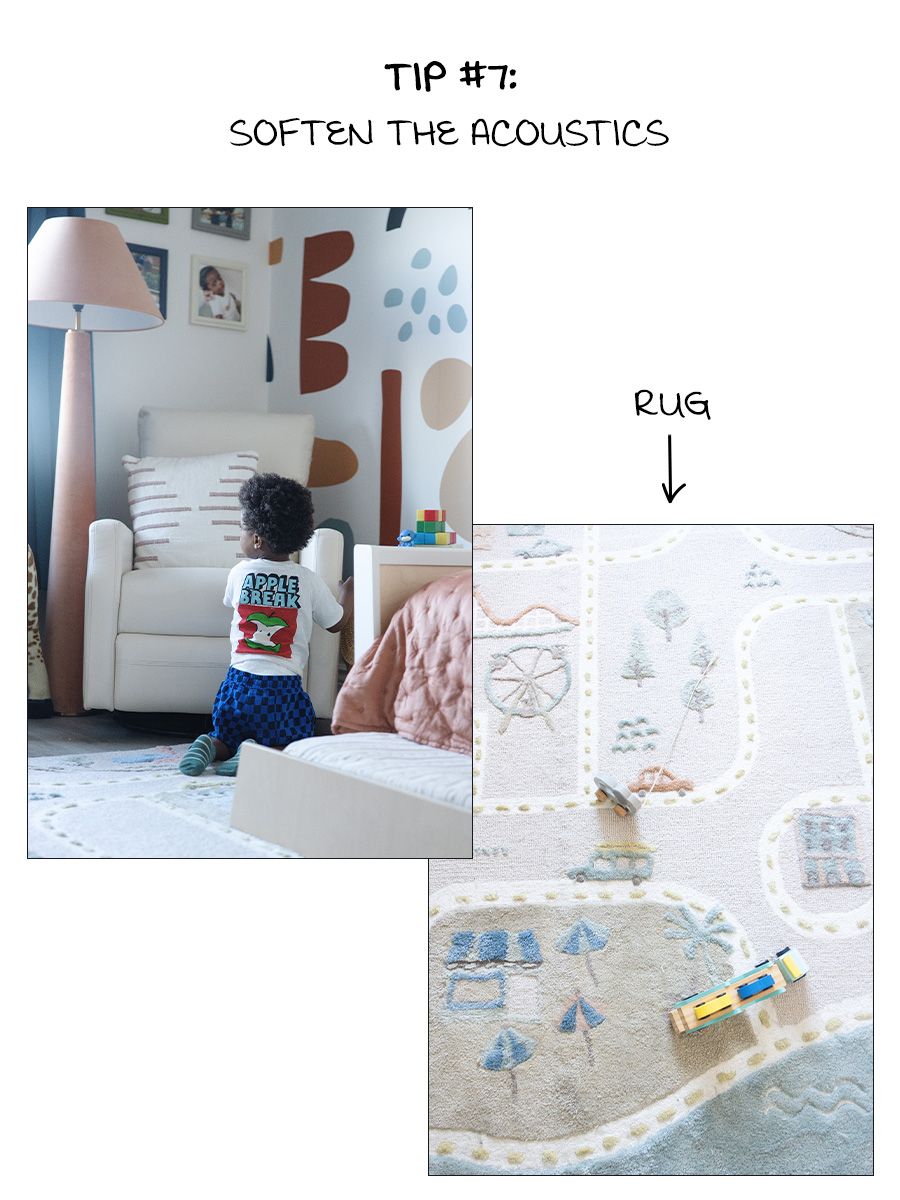
Grant’s Designer Tip: Consider area rugs, upholstered furniture, window treatments, cushions, and textiles.
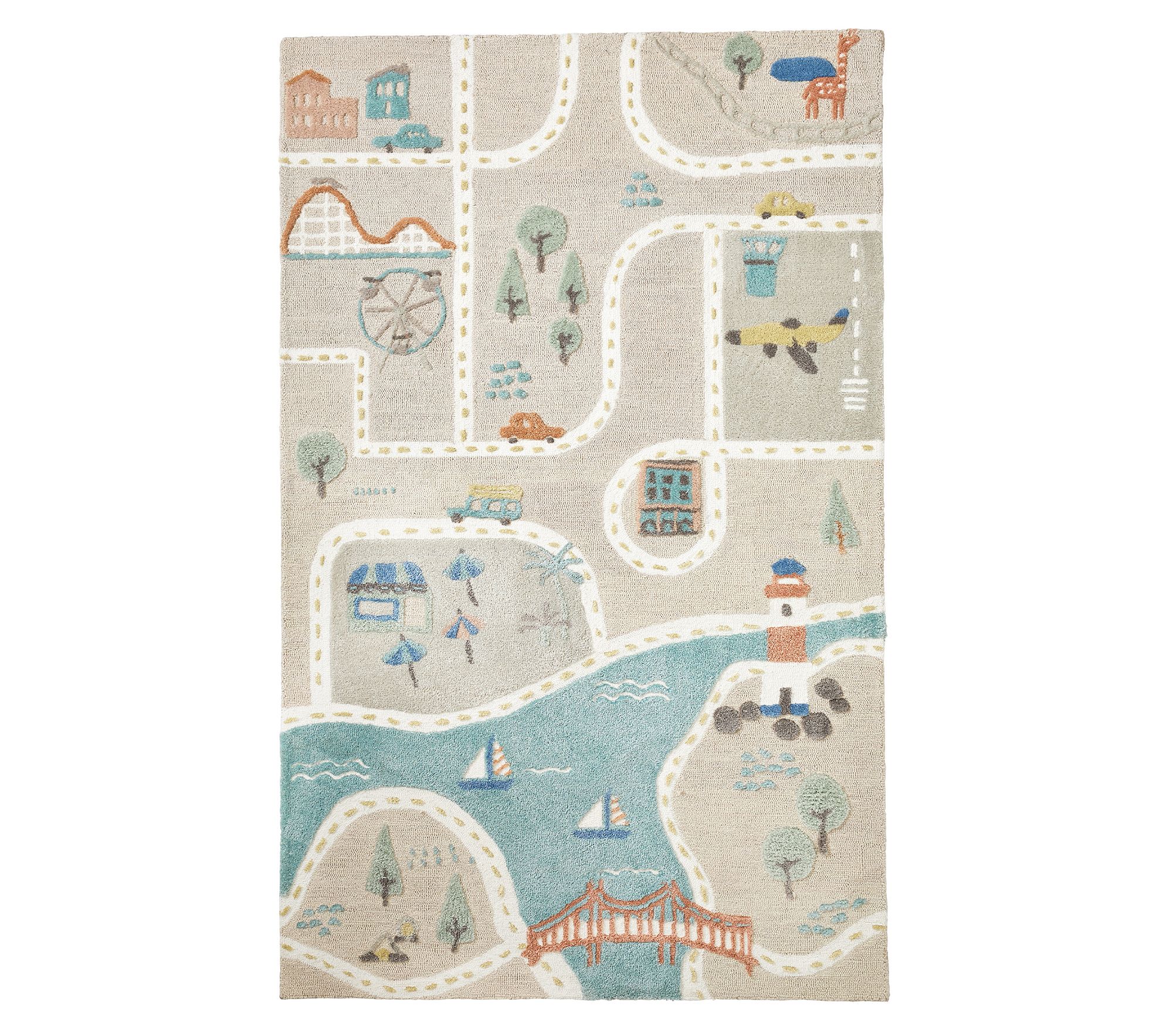
This final tip is a gift to parents and also to neighbors if you live in close proximity to them! Many disruptions come from noise (especially for those who work from home), so layering soft materials throughout the room helps absorb sound while adding warmth and comfort. It is also a little safety trick for me. Randi likes to jump off of things, pretend like he can flip like a martial artist, and crash his cars into each other. A soft and aesthetically pleasing rug in both his room and his play area was a necessity for me to combat my anxiety every time he tumbles to the floor. This Pottery Barn play rug also acts as a built-in activity mat for him to play with his cars on, perfect for encouraging his imagination.
While this journey took two months longer than expected, the outcome was well worth the wait. Phew! Give yourself some grace as you figure out what works best for your little ones, and hopefully, these tips and brand ideas make the process a little easier. Be sure to check out their sites for even more cool kids’ interiors. Take it from me: You only want to do this once. Here’s hoping we’re set for at least the next five to 10 years!
Deixe um comentário