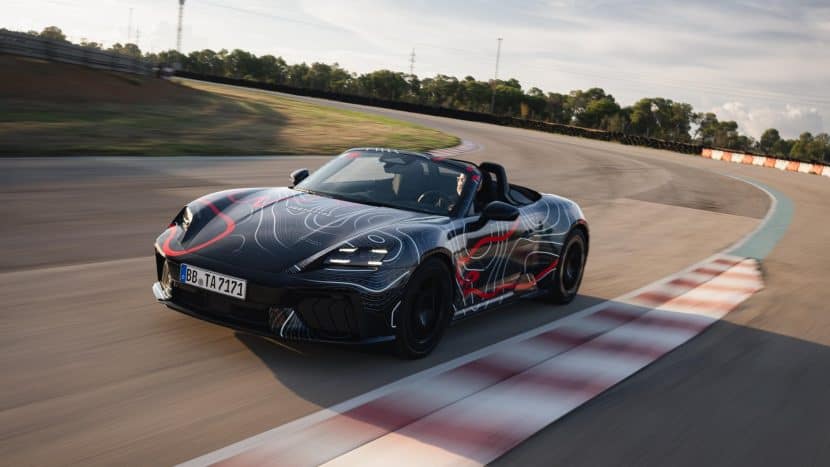
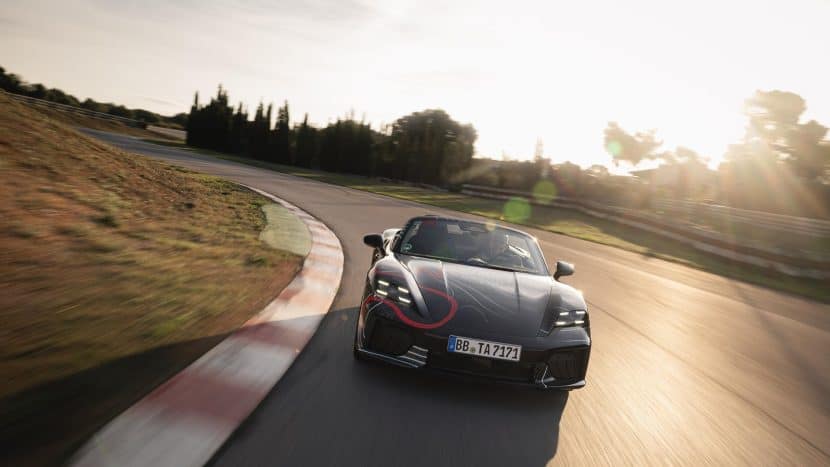
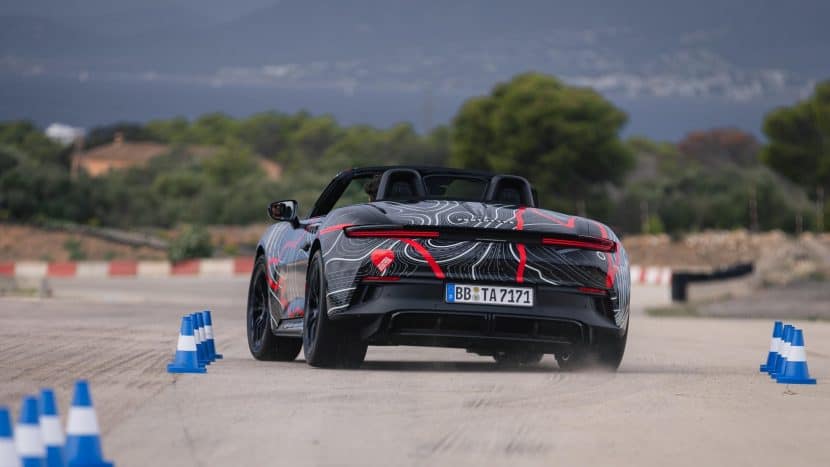
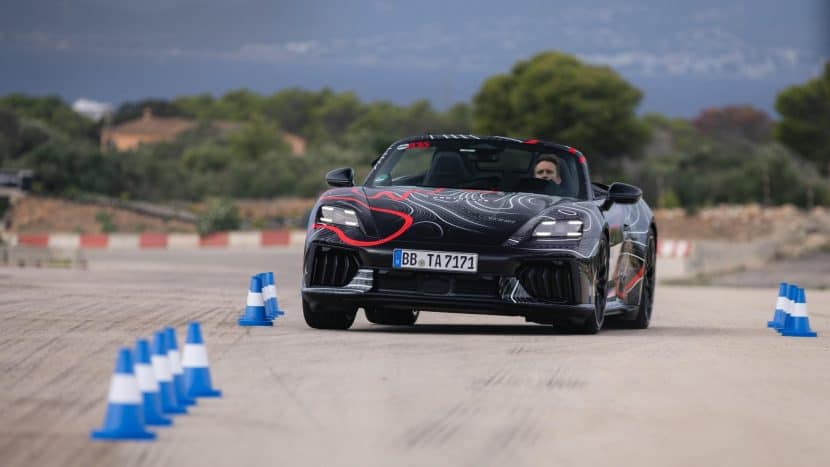
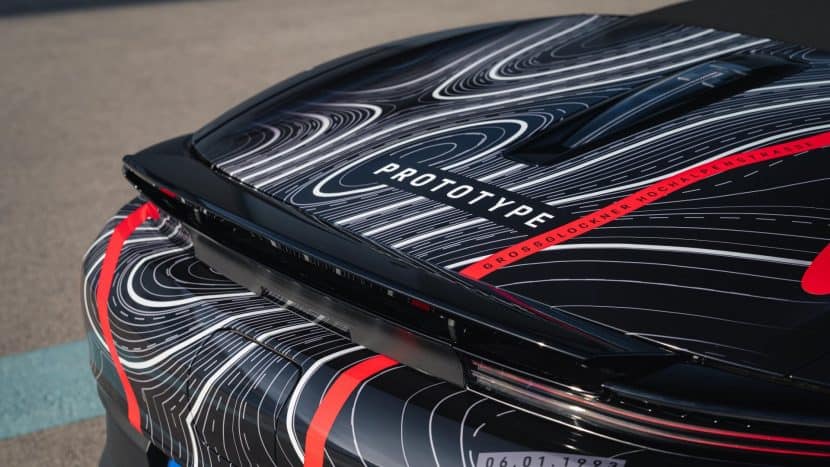
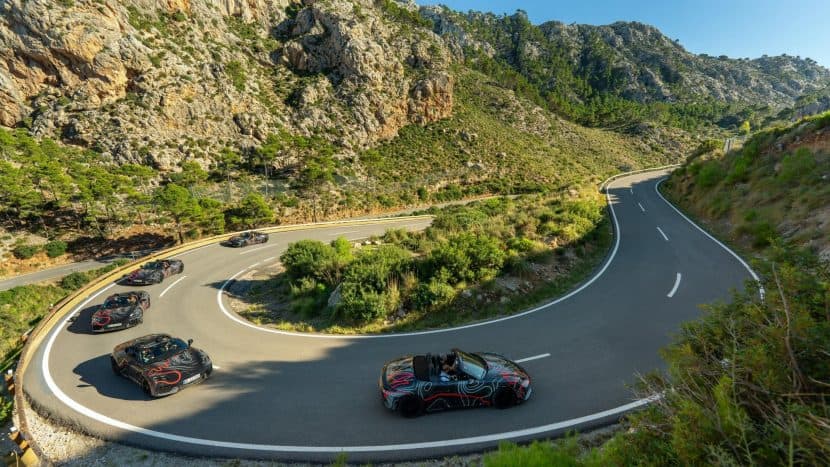
After multiple delays due to development issues, Porsche is getting closer to launching its first electric Boxster. The Stuttgart-based automaker has released preliminary details about its reborn roadster ahead of a world premiere scheduled for early 2027. Meanwhile, its longtime Bavarian rival is preparing an electric convertible of its own. However, the upcoming BMW i4 Convertible won’t occupy the same segment.
That’s because the roundel-bearing, open-top electric car expected in 2028 will be a considerably larger and heavier four-seat model. The Boxster, on the other hand, will remain a two-seat sports car with a mid-engine-inspired layout and rear-wheel drive. These are fundamentally different propositions, even if both happen to ditch the combustion engine and a fixed roof.
A proper rival would require an electric Z4, but there’s no indication that such a car is in development. BMW hasn’t announced plans for one, and there haven’t even been credible rumors pointing toward a battery-powered successor to its discontinued roadster. For now, Porsche has this particular corner of the electric sports car market largely to itself. Well, there’s also the MG Cyberster, but that comes from a mainstream brand.
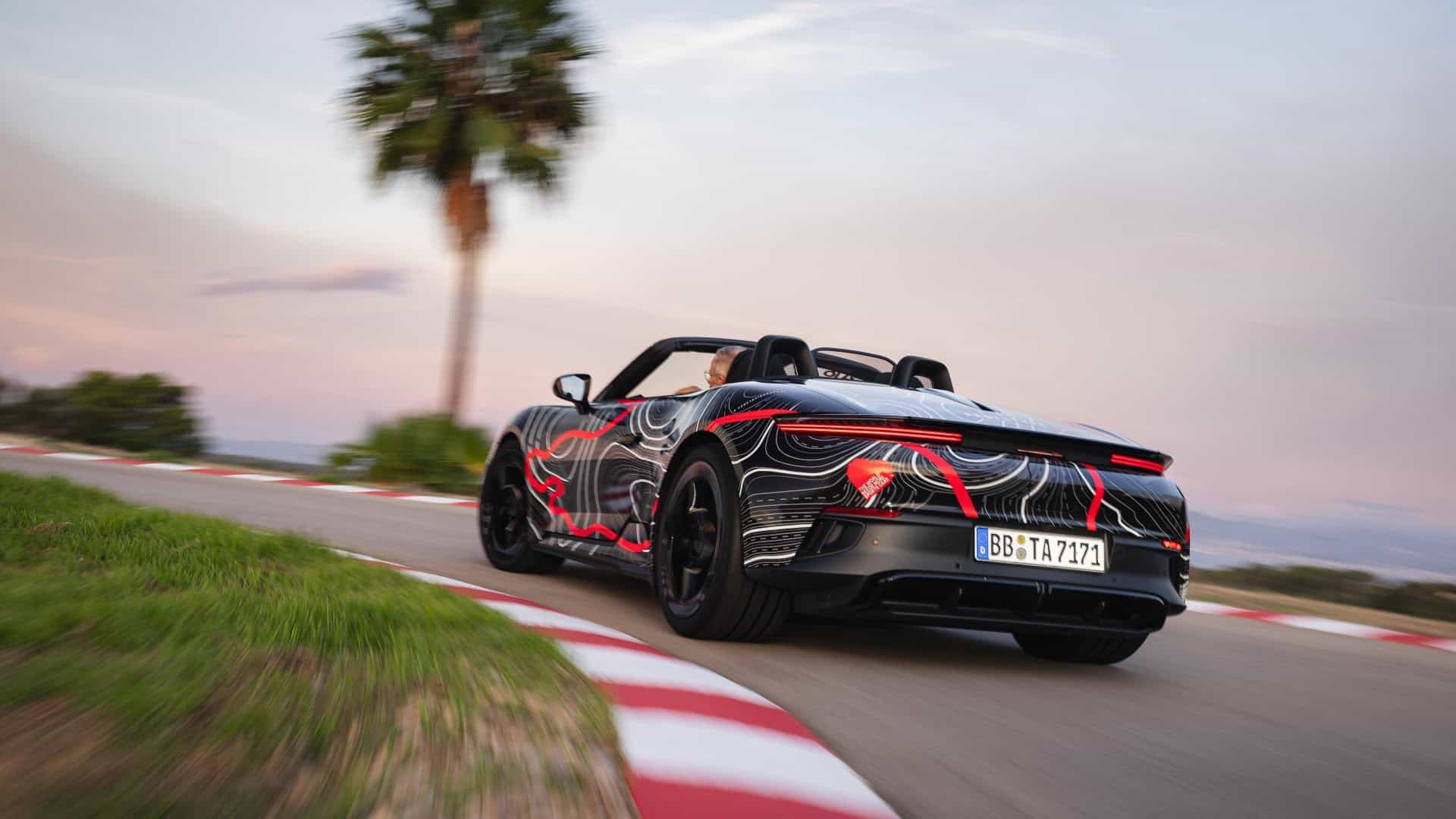
Porsche Is Taking The Electric Boxster Seriously
Porsche isn’t simply mounting a battery underneath the floor and calling it a day. Instead, engineers developed a dedicated architecture called E-Core, which puts the 800-volt battery directly behind the seats, in the space traditionally occupied by the combustion engine.
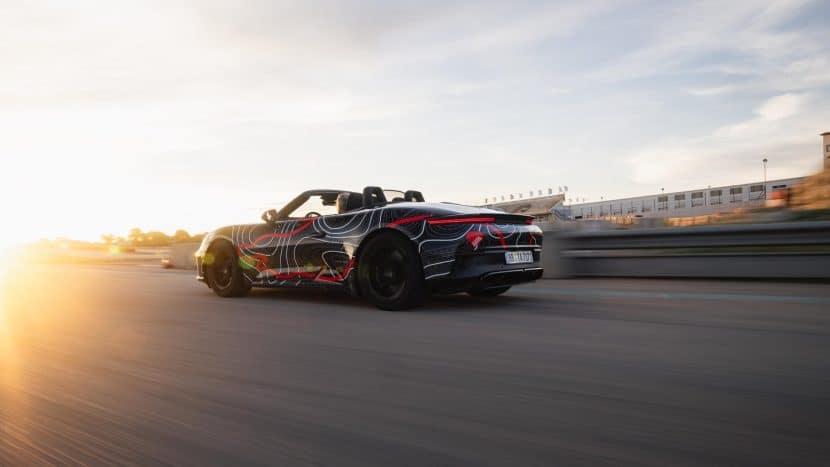
This unusual arrangement helps preserve the mid-engine character that has defined the Boxster since its introduction in the 1990s. Porsche quotes a 40:60 front-to-rear weight distribution, with most of the mass concentrated over the driven rear axle. It also allows for a low seating position, which would be harder to achieve with a conventional skateboard-style EV platform.
The company claims its lightweight construction keeps the overall weight comparable to that of a current 911 Cabriolet equipped with the T-Hybrid powertrain. That’s an ambitious target for an electric sports car, although independent estimates put the prototype at around 3,748 pounds (1,700 kilograms). We’ll have to wait for official numbers to see how close Porsche gets.
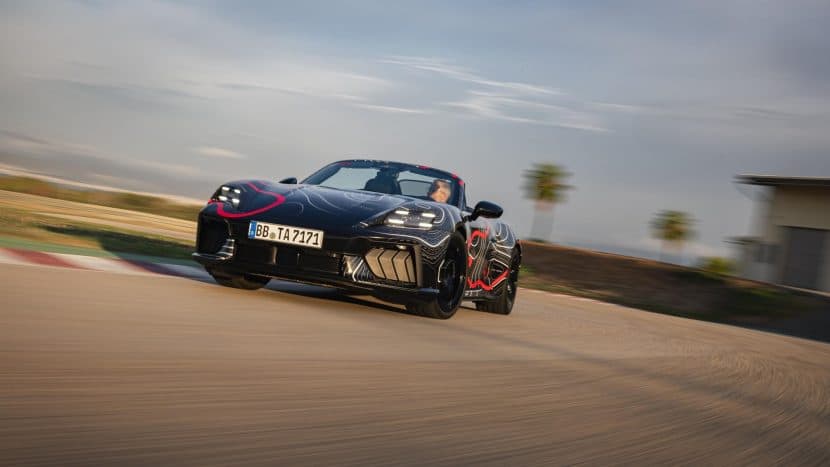
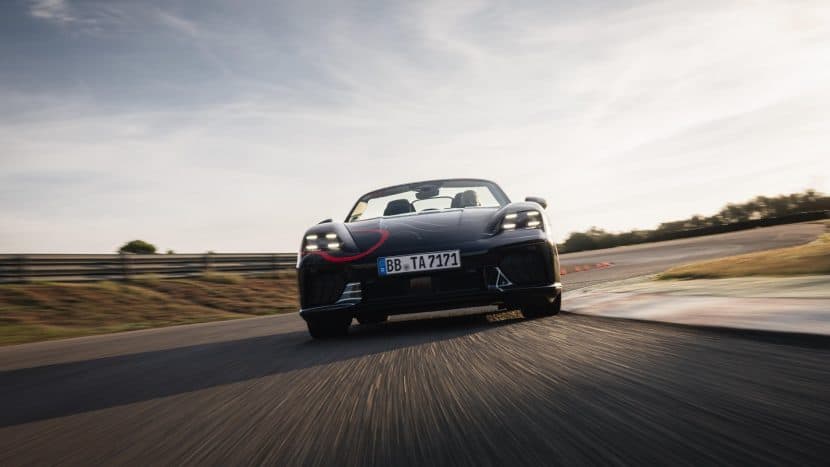
The chassis borrows heavily from its big brother, the 911. Porsche adapted the steering system from the Carrera GTS and carried over its braking hardware, wheel-and-tire dimensions, and electronically controlled limited-slip differential. For the first time in a Boxster, rear-axle steering will also be available.

A Virtual Flat-Six And Seven-Speed PDK
Perhaps the most controversial feature is also the one Porsche hopes will make the electric Boxster more appealing to traditional enthusiasts, much like BMW plans to do with the M3 ZA0. All versions will come standard with E-Shift, a system that fakes a seven-speed PDK dual-clutch transmission. Steering-wheel-mounted paddles let drivers shift manually, while an automatic mode handles gear changes. Porsche has even programmed temporary torque increases during simulated shifts, meaning acceleration remains identical whether E-Shift is activated or not. When the system is switched off, the paddles serve a different purpose, letting drivers choose between three levels of regenerative braking.
There’s also a synthesized sound inspired by the naturally aspirated flat-six from the 981-generation Boxster GTS. External and internal speakers reproduce the familiar six-cylinder noise, attempting to give occupants something closer to the experience of driving a traditional Porsche.
The Most Powerful And Fastest Boxster Ever
Porsche isn’t ready to reveal the full technical specifications, but it has confirmed that the electric Boxster will become the most powerful 718 ever made. The flagship version will accelerate from 0 to 62 mph (100 km/h) in less than three seconds and exceed 155 mph (250 km/h). The company is tight-lipped about power, battery capacity, range, or charging speeds. However, the 800-volt architecture should allow for competitive charging performance.
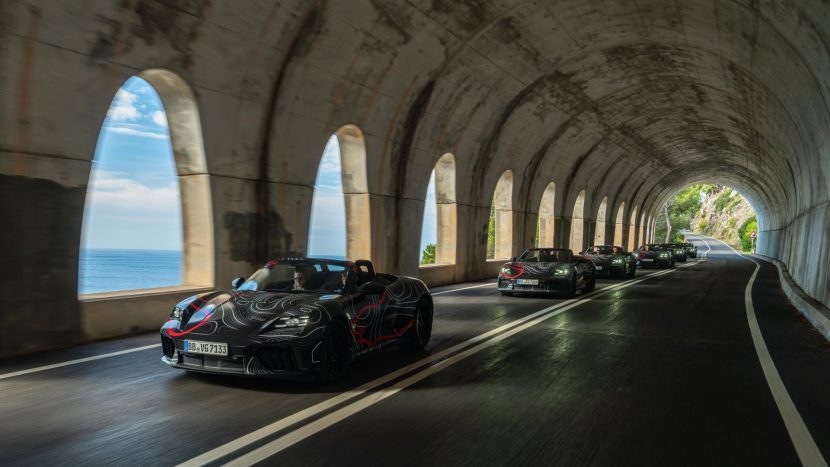
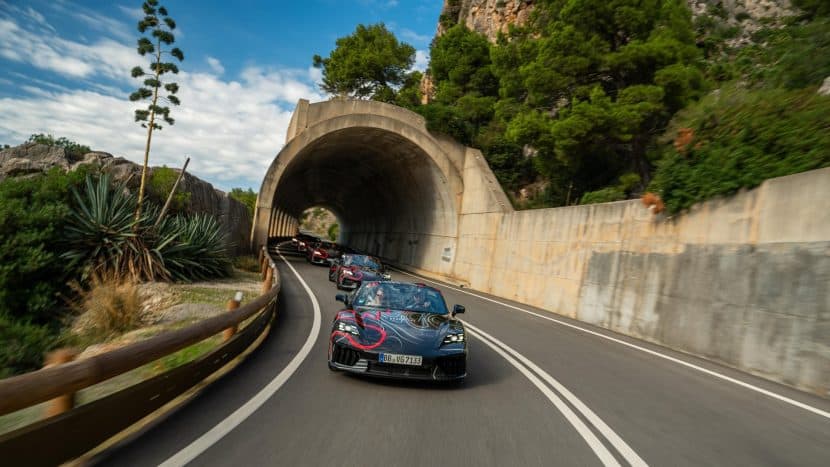
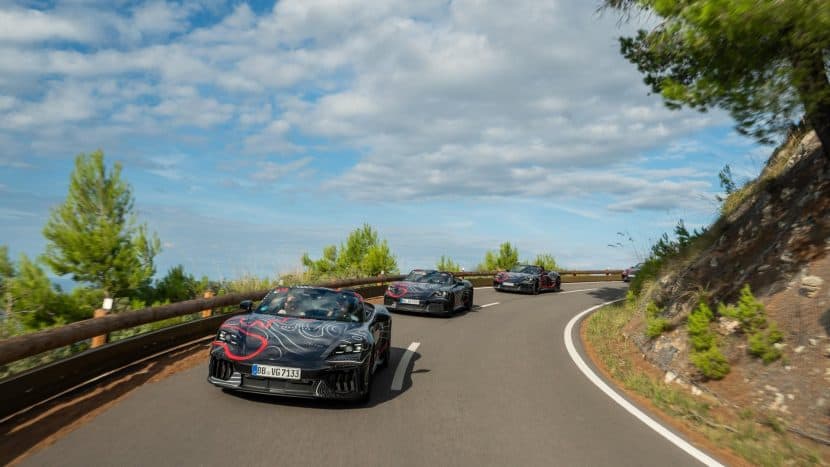
Porsche also put the prototypes through approximately 2.5 million miles (4 million kilometers) of testing across more than 20 countries. Engineers subjected the electric roadster to temperatures as low as -22 degrees Fahrenheit (-30 degrees Celsius) in Sweden and as high as 124 degrees Fahrenheit (51 degrees Celsius) in Death Valley. They also looked at charging compatibility using five different standards.
The production version will debut in the first quarter of 2027 and will be built at the Zuffenhausen plant. It’s reasonable to expect an electric 718 Cayman coupe to follow soon. For now, Porsche doesn’t have to worry about a direct competitor from Munich. The electric 718 Boxster will enter a niche that BMW appears content to leave alone, at least for now.
First published by https://www.bmwblog.com
Deixe um comentário